Biomass Pyrolysis Furnace: Complete Working Principle, Structural Composition and Process Flow Detai
1. Value and Application Significance of Biomass Pyrolysis Technology1.1 Core Application Value of Biomass Energy Conversion
Biomass pyrolysis furnace realizes harmless and resource-based conversion of agricultural and forestry waste, becoming core equipment for renewable energy and carbon sequestration industry.
Agricultural and forestry wastes such as crop straw, wood chips, rice husks, branches and sawdust are huge renewable biomass resources. Traditional open burning and random stacking cause serious environmental pollution and resource waste. Biomass pyrolysis technology uses sealed low-oxygen high-temperature thermal decomposition to convert solid biomass waste into high-value biochar, pyrolysis gas and bio-oil. It realizes full resource utilization of waste materials, and is widely used in clean energy production, soil improvement, industrial carbon material preparation, environmental protection treatment and other fields, with significant economic and environmental benefits.
1.2 Advantages of Closed Pyrolysis Furnace Over Traditional Carbonization Equipment
Traditional open carbonization has low conversion rate and serious flue gas pollution, while integrated pyrolysis furnace achieves clean, efficient and continuous production.
Traditional simple carbonization kilns adopt open or semi-open combustion carbonization mode, which is uncontrollable in temperature, incomplete in material reaction, low in biochar yield, and accompanied by a large amount of unorganized flue gas and tar emission, failing to meet environmental protection standards. The integrated biomass pyrolysis furnace adopts fully sealed low-oxygen pyrolysis design, with precise temperature and atmosphere control. It realizes staged thermal decomposition of biomass materials, with high product purity, stable output and centralized flue gas recovery and treatment. It completely solves the pain points of low efficiency, heavy pollution and unstable quality of traditional equipment.
1.3 Industry Application Scenarios and Technical Orientation
Modern intelligent biomass pyrolysis furnace is oriented to industrial batch production, realizing multi-product collaborative output and energy self-circulation operation.
With the continuous upgrading of environmental protection policies and renewable energy industry, biomass pyrolysis equipment has developed from simple intermittent carbonization to continuous, intelligent and energy-saving integrated equipment. The new generation pyrolysis furnace can adapt to diversified raw materials such as woody biomass and herbaceous biomass, and realize synchronous preparation of biomass charcoal, combustible gas and bio-oil. The recycled pyrolysis gas can be used for furnace body heating, realizing self-energy circulation, reducing operating costs, and is suitable for large-scale industrial supporting and rural environmental governance projects.
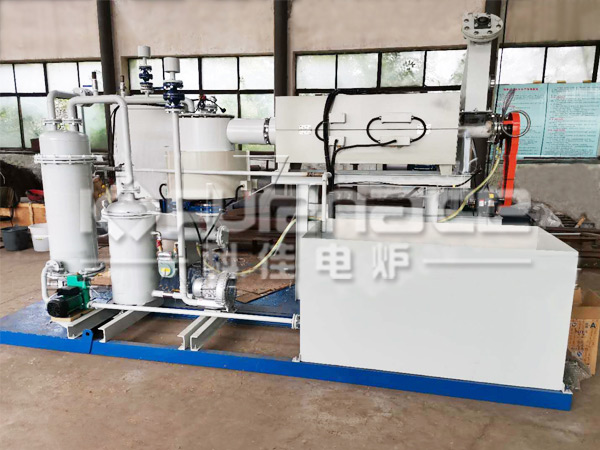
Biomass pyrolysis refers to the irreversible thermal decomposition reaction of organic components under sealed low-oxygen and high-temperature conditions, realizing separation of solid, liquid and gas phases.
Biomass materials are mainly composed of cellulose, hemicellulose and lignin. Under low-oxygen or anaerobic sealed environment and controlled high-temperature heating of 300–600℃, the internal organic molecular chains undergo fracture and rearrangement. The volatile components are precipitated in the form of gas and tar vapor, and the remaining fixed carbon and inorganic ash form solid biochar. The whole process avoids complete combustion of materials, realizes directional pyrolysis and carbonization, and finally obtains three high-value products: solid biochar, combustible pyrolysis gas and liquid bio-oil.
2.2 Staged Pyrolysis Reaction Mechanism
The internal reaction of the pyrolysis furnace is divided into drying, pre-carbonization, deep pyrolysis and cooling stabilization stages, with sequential and layered precise material conversion.
First, the biomass raw materials enter the low-temperature drying area to remove surface moisture and internal bound water through thermal radiation and hot air convection. Then, in the pre-carbonization stage at 200–350℃, low-boiling volatile components are precipitated, and the material preliminarily carbonized. In the deep pyrolysis stage at 350–600℃, a large number of macromolecular organics are cracked into small-molecule gas and tar components, and the material is deeply carbonized and formed. Finally, the materials enter the sealed cooling area to stabilize the carbon structure and avoid secondary oxidation and combustion.
2.3 Low-Oxygen Energy Self-Circulation Principle
The sealed micro-oxygen environment inhibits material combustion, and recycled pyrolysis gas provides heating heat source to realize low-energy-consumption cyclic operation.
The pyrolysis furnace maintains a stable low-oxygen sealed state during operation, which can effectively prevent biomass from fully burning and ensure directional carbonization and cracking. The high-temperature pyrolysis gas generated in the furnace is recovered and purified, and part of it is returned to the combustion system as fuel to provide continuous and stable heat source for furnace body heating. The self-circulation energy supply mode greatly reduces external energy consumption, realizes energy self-sufficiency of the equipment, and significantly reduces production and operation costs.3. Complete Structural Composition of Biomass Pyrolysis Furnace3.1 Raw Material Pretreatment and Feeding System
Closed feeding and homogenization pretreatment ensure stable and continuous material supply and avoid air leakage and oxygen intrusion.
The system includes crushing equipment, drying device, buffer silo and sealed screw feeder. Raw materials are crushed into uniform particles to ensure consistent pyrolysis reaction; the drying system controls the material moisture within the process standard range to avoid excessive moisture affecting pyrolysis efficiency and product quality. The fully sealed screw feeding structure isolates external air from entering the furnace body, maintains low-oxygen environment stability, and realizes quantitative, uniform and continuous feeding to lay a foundation for stable batch pyrolysis.
3.2 Main Furnace Body Pyrolysis Reaction System
The multi-layer temperature-zoning furnace body is the core reaction carrier, realizing staged heating and directional cracking of biomass materials.
The main furnace body adopts high-temperature resistant thermal insulation lining and sealed steel structure, which is divided into drying zone, pre-carbonization zone, deep pyrolysis zone and constant-temperature carbonization zone from top to bottom. Each temperature zone independently controls heating power and temperature parameters to adapt to the reaction characteristics of materials in different stages. The internal rotary or layered material distribution structure ensures uniform material heating, avoids local overheating or insufficient cracking, and realizes full and stable pyrolysis reaction of biomass.
3.3 Heat Supply and Temperature Control System
Intelligent constant-temperature heat supply and multi-stage temperature regulation ensure accurate and stable pyrolysis temperature field in the furnace.
It includes combustion heat supply device, hot air circulation system and PLC intelligent temperature control module. The system adopts dual heat supply mode of external fuel heating and self-pyrolysis gas recycling heating. It monitors the temperature of each zone in the furnace in real time, dynamically adjusts heating power and heat supply volume, precisely controls the pyrolysis temperature difference, ensures that the material reaction temperature is always within the optimal process range, and guarantees consistent pyrolysis degree and product quality stability.
3.4 Flue Gas Purification and Product Separation System
Multi-stage cyclone separation, condensation purification and gas-liquid separation realize classified recovery of pyrolysis gas, bio-oil and impurities.
The high-temperature mixed flue gas generated by pyrolysis first enters the cyclone dust removal device to separate solid dust and carbon powder impurities. Then it passes through the multi-stage cooling condensation system to cool tar vapor and organic volatile components into liquid bio-oil for centralized collection. The remaining clean combustible pyrolysis gas is recycled to the furnace body for heating or stored for secondary utilization. The whole process realizes gas-liquid-solid three-phase classified recovery and zero-discharge clean treatment.
3.5 Sealed Discharging and Cooling System
Water-cooled sealed discharging avoids secondary oxidation of high-temperature biochar and ensures safe and stable product output.
The high-temperature biochar after pyrolysis and carbonization enters the sealed water-cooled cooling conveyor, which quickly reduces the material temperature to normal temperature in an oxygen-isolated environment. It completely avoids deflagration and secondary oxidation caused by contact between high-temperature carbon and air. The quantitative discharging structure ensures uniform and stable output of finished biochar, and effectively guarantees the yield and quality of solid carbon products.
3.6 Intelligent Control and Safety Protection System
Full-parameter monitoring and interlocking protection mechanism realize intelligent operation and safe production of equipment.
Equipped with industrial PLC control system, it realizes real-time monitoring and automatic adjustment of furnace temperature, oxygen content, material feeding speed, gas flow and other parameters. It has over-temperature protection, over-pressure relief, air leakage alarm and flue gas over-standard protection functions. The full-process data recording and traceability function meets industrial production management standards, reduces manual operation errors, and ensures long-term stable and safe operation of the equipment.4. Complete Standard Process Flow of Biomass Pyrolysis Furnace4.1 Raw Material Pretreatment Process
Precise crushing and constant moisture drying are the preconditions for uniform pyrolysis and stable product quality.
Collect agricultural and forestry biomass raw materials, remove impurities such as stones and metal sundries, crush them into uniform particle size through professional crushing equipment, and screen and classify them. The crushed materials enter the drying system to control the moisture content within 8%–12%. After drying and cooling, the materials are stored in a sealed buffer silo to prevent moisture re-absorption, ensuring that the raw material particle size and moisture are uniform and stable, and laying a foundation for subsequent full pyrolysis reaction.
4.2 Sealed Quantitative Feeding Process
Closed continuous feeding isolates external air disturbance and stabilizes low-oxygen pyrolysis environment in the furnace.
The pretreated biomass particles are quantitatively and continuously sent into the top of the pyrolysis furnace through a sealed screw feeder. The fully sealed feeding structure prevents cold air from entering the furnace body, avoids oxygen content fluctuation, and ensures that the interior is always in a stable low-oxygen anaerobic reaction state. The feeding speed is intelligently linked with the furnace temperature and pyrolysis progress to realize dynamic matching of material quantity and reaction efficiency.
4.3 Staged High-Temperature Pyrolysis Reaction Process
Layered temperature rise and staged reaction realize directional cracking and carbonization of biomass materials.
After entering the furnace body, the materials pass through four core stages in sequence: first, low-temperature drying and dehydration to remove residual moisture; second, medium-temperature pre-carbonization to precipitate low-boiling volatile components; third, high-temperature deep pyrolysis to crack macromolecular organics and separate gas-liquid components; fourth, constant-temperature carbonization and shaping to stabilize the solid carbon structure. Each stage adopts independent temperature control parameters to ensure sufficient reaction and avoid incomplete cracking or over-carbonization defects.
4.4 Flue Gas Purification and Three-Phase Separation Process
Multi-stage purification and condensation realize high-purity recovery of pyrolysis gas and bio-oil, achieving clean production.
The high-temperature mixed flue gas generated by pyrolysis is discharged from the upper part of the furnace body, and first removes solid dust and carbon powder impurities through cyclone separation. Then it enters the multi-stage cooling condensation system, and the tar and organic volatile components are condensed into liquid bio-oil and collected centrally. The remaining clean pyrolysis gas is filtered and purified, and most of it is recycled to the furnace as heating fuel, and a small part is stored for standby. The whole process realizes full resource utilization of flue gas without waste gas emission.
4.5 Sealed Cooling and Finished Product Discharging Process
Oxygen-isolated rapid cooling prevents secondary oxidation of biochar and ensures stable finished product performance.
The solid biochar formed by deep carbonization falls into the sealed water-cooled discharging system, and the high-temperature material is rapidly cooled to normal temperature in an oxygen-free environment. After cooling, the finished biochar is quantitatively and continuously discharged. The discharged biochar has stable structure, high carbon content and no secondary oxidation loss. After screening and packaging, it can be used as soil improvement biochar, industrial carbon material and other finished products.
4.6 Process Data Detection and Quality Closed-Loop Management
Full-process parameter monitoring and real-time adjustment ensure batch stability of pyrolysis products.
During the whole production process, the system monitors furnace temperature, oxygen content, feeding speed, gas flow, cooling temperature and other core parameters in real time, and automatically adjusts process parameters according to material changes and reaction conditions. Regular sampling and detection of biochar fixed carbon content, pyrolysis gas calorific value and bio-oil purity are carried out to form production data reports, realizing full-process traceability and closed-loop quality control, and ensuring stable batch production quality.5. Core Equipment Advantages and Industry Development ProspectIntegrated intelligent biomass pyrolysis furnace has become the mainstream core equipment for biomass waste resource utilization.
Compared with traditional carbonization equipment, the new generation of biomass pyrolysis furnace has outstanding advantages such as sealed low-pollution operation, energy self-circulation, high product yield and intelligent continuous production. It can efficiently convert various agricultural and forestry biomass wastes into high-value renewable products, solve the environmental pollution problem of biomass waste stacking and burning, and create good economic and environmental benefits. It is widely used in environmental protection energy, ecological agriculture, new material preparation and other fields.
Intelligent precise pyrolysis and multi-product high-value utilization will promote the upgrading of biomass energy industry.
In the future, biomass pyrolysis furnace will develop towards higher temperature control accuracy, fully automatic unattended operation, and multi-product precise classification and utilization. The continuous optimization of pyrolysis process parameters will further improve biomass conversion rate and product added value, realize large-scale, high-efficiency and clean resource utilization of biomass waste, and strongly support the green and low-carbon development of ecological environmental protection and new energy industry.
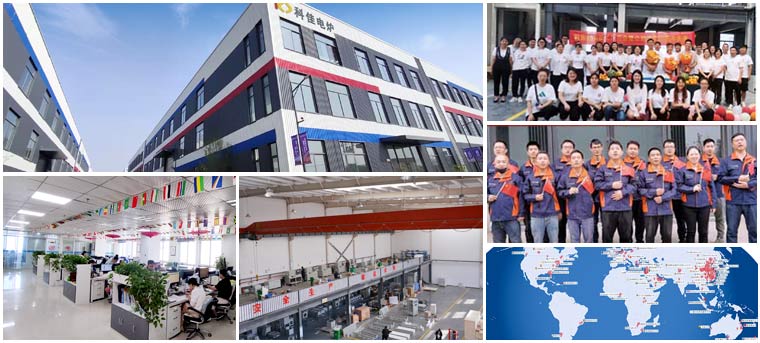
Zhengzhou KJ Technology Co., Ltd. is a high-tech enterprise specializing in the research, development and sales of heat treatment products. Our products cover muffle furnaces, tube furnaces, vacuum furnaces, atmosphere furnaces, CVD/PECVD systems, dental furnaces, bell type furnaces , trolley furnaces, etc., which are widely used in metallurgy, vacuum brazing, ceramic sintering, battery materials, metal processing , parts annealing, additive manufacturing, semiconductors, scientific intelligent instrumentation, aerospace and industrial automatic control systems and other different fields.
For inquiries and customized solutions, please feel free to contact us.
WhatsApp: +86 18037178440
Email: web@kejiafurnace.com
 English
 简体中文
简体中文 Русский язык
 Français
 日本語
日本語 한국어
한국어 Português
 Español
 Website navigation
 Position:








 Send E-mail:web@kejiafurnace.com
 Wechat/Whatsapp: +86 18037178440
 Company Tell: +(86)18037178440





 E-mail:web@kejiafurnace.com
 Tell:+(86) 18037178440
 Whatapp:+(86) 180-3717-8440
 Address:Room 1505, Building 9, No. 26 Dongqing Street, Zhengzhou High-tech Industrial Development Zone