Biomass Pyrolysis Furnace: Industrial Difficulties, Common Faults and Development Prospect
1. Industrial Application Status and Core Restrict Factors1.1 Current Progress of Biomass Pyrolysis Industrialization
Biomass pyrolysis technology has matured in laboratory research, but large-scale industrial promotion still faces systematic bottlenecks in equipment stability, process matching and economic operation.
With the continuous promotion of carbon neutrality and solid waste recycling policies, biomass pyrolysis furnace technology has become an important path for high-value utilization of agricultural and forestry residues. After years of technical iteration, the basic pyrolysis mechanism and small-batch test production have been fully verified. However, most industrial projects still stay in the stage of small-scale and intermittent production. It is difficult to realize long-term continuous, stable and low-cost operation, and the overall industrialization level is far behind laboratory technical maturity.
1.2 Main Restrictions of Large-Scale Promotion
Raw material instability, equipment operational defects and imperfect supporting systems are the three major obstacles restricting the large-scale landing of pyrolysis projects.
Different from standardized chemical equipment, biomass pyrolysis furnaces are greatly affected by raw material particle size, moisture content and material diversity. Raw material fluctuation directly leads to unstable pyrolysis temperature and unbalanced product yield. At the same time, most industrial equipment has problems such as poor high-temperature durability, incomplete tail gas treatment and difficult tar disposal. In addition, the lack of unified industry standards, imperfect product market system and high operation threshold further restrict the rapid popularization and large-scale industrial landing of pyrolysis technology.

Biomass raw materials have complex components and unstable properties, which cannot be directly adapted to standardized industrial pyrolysis parameters, resulting in poor batch consistency.
Agricultural and forestry wastes such as straw, wood chips and bark have obvious differences in fiber structure, moisture content and ash content. Conventional industrial pyrolysis furnaces adopt fixed heating rate and residence time parameters, which cannot dynamically match material changes. Raw materials with excessive moisture will cause incomplete pyrolysis and increased gas production; materials with excessive fine powder will lead to excessive coking and tar blockage. Complicated preprocessing procedures such as crushing and drying increase the initial investment and operating cost of the project, forming the primary barrier for industrial landing.
2.2 Continuous Operation and Process Control Difficulties
Long-term continuous pyrolysis is prone to temperature field drift, micro oxygen leakage and product component deviation, which makes industrial stable control difficult.
Industrial production requires 24-hour continuous operation of the furnace body, while long-term high-temperature operation will cause thermal deformation of the furnace body, aging of sealing structure and deviation of temperature control system. Micro oxygen leakage in the furnace leads to oxidative burning loss of biochar and reduced product yield. In addition, the dynamic changes of feeding volume and heating state will cause real-time changes in the proportion of gas, liquid and solid three-phase products, making it difficult to form fixed industrial parameters, resulting in unstable product quality and low resource utilization rate of large-scale production lines.
2.3 Economic and Supporting System Defects
High operation and maintenance costs, imperfect tar treatment and unsmooth product sales chain restrict the economic benefits of industrial projects.
Biomass pyrolysis industrial projects involve multiple systems such as feeding, pyrolysis, condensation, tail gas treatment and power control, with high initial equipment investment and high daily maintenance cost. The bio-oil produced has poor stability and complex components, requiring secondary refining before industrial utilization, which increases additional processing costs. The market matching degree of biochar products is insufficient, and the lack of unified industry evaluation standards leads to unstable product sales prices, making many projects face the dilemma of high investment and low return.3. Typical Equipment Faults and Root Cause Analysis3.1 Furnace Body Temperature and Atmosphere Abnormity
Furnace temperature fluctuation and micro oxygen leakage are the most frequent faults in industrial production, directly causing product quality degradation.
Long-term thermal cycling leads to deformation of furnace lining and flange clearance, resulting in poor air tightness of the equipment and external air infiltration. Excessive oxygen content in the furnace causes oxidation and burning of biochar, surface discoloration and reduced yield. Aging of temperature sensing elements and drift of PID parameters lead to inaccurate temperature control, which makes the pyrolysis reaction insufficient or excessive, resulting in unstable calorific value of syngas and unqualified bio-oil components.
3.2 Pipeline Blockage and Tar System Failure
Tar condensation and dust accumulation cause blockage of flue pipe and condenser, which is the main cause of shutdown and maintenance of pyrolysis furnace.
A large amount of high-viscosity tar and fine powder impurities will be produced during biomass pyrolysis. In the low-temperature section of the pipeline and condenser, tar is easy to condense and adhere to the pipe wall, forming thick dirt blockage after long-term accumulation. Pipeline blockage will lead to poor exhaust gas discharge, increased furnace pressure, unstable pyrolysis atmosphere, and even cause safety hazards such as backfire. It is the most common and difficult maintenance fault in industrial continuous production.
3.3 Feeding and Discharging Mechanical Failure
Material jamming, uneven feeding and carbon discharging leakage lead to discontinuous production and reduced operational efficiency.
Impurity mixing and uneven particle size of biomass raw materials often cause jamming and bridging of the feeding system, resulting in intermittent feeding and unstable pyrolysis load. The high-temperature carbon discharging mechanism is prone to wear and air leakage after long-term operation, leading to heat loss and oxygen mixing in the furnace. Mechanical faults will cause frequent start-stop of the production line, seriously affect the continuity of industrial production, and increase equipment failure rate and labor maintenance cost.4. Industrial Operation Optimization and Fault Solution Strategy4.1 Raw Material Preprocessing Standardized Control
Unify raw material particle size and moisture indicators, build standardized preprocessing system to eliminate production fluctuation caused by material differences.
Set classified crushing and drying standards according to different biomass materials, strictly control raw material moisture and particle uniformity, and avoid pyrolysis reaction deviation caused by material differences. Establish graded feeding and batching mechanism for miscellaneous materials to improve the adaptability of the furnace body to diversified raw materials. Stable raw material pretreatment is the premise to realize long-term continuous and stable industrial production of pyrolysis furnace.
4.2 Equipment Sealing and Temperature Control Precision Optimization
Optimize furnace body sealing structure and intelligent temperature control system to solve micro oxygen leakage and temperature drift faults.
Upgrade high-temperature resistant sealing components and adopt multi-channel sealing protection structure to avoid air leakage caused by thermal deformation. Equip online oxygen content monitoring and pressure sensing system to realize real-time early warning of furnace atmosphere abnormality. Regularly calibrate thermocouples and optimize temperature control PID parameters to ensure stable temperature field in the furnace, sufficient and controllable pyrolysis reaction, and effectively improve the stability of three-phase product quality.
4.3 Tar Treatment and Pipeline Anti-Blockage Scheme
Adopt graded condensation and online cleaning mechanism to thoroughly solve tar blockage and pipeline failure problems.
Optimize the condensation system structure, set graded cooling and tar trapping device to reduce tar residue in exhaust gas. Equip pipeline heat preservation and online dust cleaning device to avoid tar condensation and powder deposition. Formulate regular pipeline maintenance and cleaning system to eliminate hidden dangers of blockage in advance, ensure smooth exhaust gas circulation, stable furnace pressure and continuous and efficient operation of industrial production line.5. Industry Development Trend and Future Prospect5.1 Intelligent and Automatic Upgrading Trend
Intelligent full-process control and automatic operation will become the core upgrading direction of industrial pyrolysis equipment.
The traditional empirical manual operation mode will be gradually eliminated. Future biomass pyrolysis furnaces will realize automatic feeding, intelligent temperature adjustment, real-time atmosphere monitoring and automatic fault alarm. Through digital parameter database, standardized production formulas will be formed to eliminate artificial operation errors, improve production line continuity and stability, and reduce labor operation and maintenance costs.
5.2 High-Value and Diversified Product Development
The industry will shift from simple waste disposal to high-value comprehensive utilization of three-phase products, greatly improving project economic benefits.
With the continuous improvement of post-processing technology of bio-oil and biochar, the downstream industrial chain will be further expanded. Biochar will be widely used in carbon sequestration, soil improvement and environmental adsorption materials; bio-oil will be refined into high-value chemical raw materials and clean fuels; syngas will realize efficient energy self-supply and power generation. The multi-product symbiosis mode will completely change the low-profit situation of single waste disposal.
5.3 Standardization and Large-Scale Industrial Prospect
With the improvement of industry standards and supporting facilities, biomass pyrolysis will usher in large-scale, standardized and low-cost industrial development.
In the context of dual-carbon policy, biomass recycling will become a key development track of green environmental protection industry. In the future, the industry will form unified equipment manufacturing standards, process parameter specifications and product evaluation systems. Through equipment iteration and process optimization, the problems of high energy consumption and high failure rate will be solved, and biomass pyrolysis technology will be popularized and applied on a large scale in waste recycling, energy conservation and emission reduction fields, showing broad industrial development prospects.
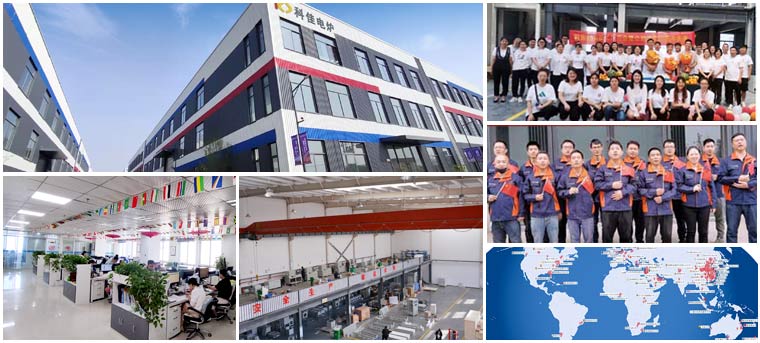
Zhengzhou Kejia Technology Co., Ltd. is a high-tech enterprise specializing in R&D and sales of heat treatment products, including muffle furnaces, tube furnaces, vacuum furnaces and more, widely used in metallurgy, ceramic sintering, battery materials, semiconductors, aerospace and other fields.
For inquiries and customized solutions, contact us via WhatsApp: +86 18037178440 or Email: web@kejiafurnace.com.
 English
 简体中文
简体中文 Русский язык
 Français
 日本語
日本語 한국어
한국어 Português
 Español
 Website navigation
 Position:








 Send E-mail:web@kejiafurnace.com
 Wechat/Whatsapp: +86 18037178440
 Company Tell: +(86)18037178440





 E-mail:web@kejiafurnace.com
 Tell:+(86) 18037178440
 Whatapp:+(86) 180-3717-8440
 Address:Room 1505, Building 9, No. 26 Dongqing Street, Zhengzhou High-tech Industrial Development Zone