Fast and Slow Biomass Pyrolysis Differences: Furnace Selection and Production Matching
1. Overview of Biomass Pyrolysis Process and Production Characteristics1.1 Basic Principle of Biomass Thermal Pyrolysis
Biomass pyrolysis refers to the oxygen-free thermal decomposition of biomass raw materials at high temperature, producing biochar, bio-oil and syngas, with pyrolysis rate dominating product composition and quality.
Biomass pyrolysis is a core thermal conversion technology for agricultural and forestry waste resources. Under isolated air and high-temperature conditions, macromolecular organic substances in biomass such as cellulose, hemicellulose and lignin undergo cracking, rearrangement and polymerization reactions to form three-phase products of solid, liquid and gas. Different from fixed industrial processes, biomass pyrolysis has strong process flexibility. Changes in heating rate, reaction temperature and material residence time will significantly change the product yield ratio, forming two mainstream process types: fast pyrolysis and slow pyrolysis.
1.2 Practical Dilemmas in Industrial Pyrolysis Production
Unclear process positioning and mismatched furnace operation parameters lead to unbalanced three-phase products, low resource utilization and poor economic benefits.
In actual factory operation, most production lines adopt empirical unified pyrolysis parameters, failing to distinguish the process differences between fast and slow pyrolysis. When taking bio-oil as the main product, long-term low-speed carbonization results in extremely low liquid yield; when producing high-quality biochar, excessive fast pyrolysis leads to loose carbon structure and poor stability. Process mismatch not only wastes raw materials and energy, but also causes unstable batch quality, which restricts the standardized and large-scale development of biomass pyrolysis industry.

The essential difference between fast pyrolysis and slow pyrolysis lies in heating gradient and residence time, forming two completely different thermal reaction paths.
Slow pyrolysis adopts low heating rate and long-period constant temperature carbonization, with material residence time controlled at 30 minutes to several hours. The biomass volatile components are slowly precipitated and decomposed fully, and the carbon skeleton is stably retained, focusing on solid-phase carbonization reaction. Fast pyrolysis uses rapid heating and ultra-short residence time within seconds. The materials complete instantaneous thermal decomposition before carbonization, which inhibits solid carbon generation and promotes rapid gas-liquid conversion, realizing high-efficiency liquid phase product enrichment.
2.2 Comparison of Three-Phase Product Yield and Performance
Slow pyrolysis is dominated by high-quality biochar output, while fast pyrolysis is mainly for high-yield bio-oil preparation, with obvious differentiation of product advantages.
Slow pyrolysis has a high solid yield. The prepared biochar has dense structure, high carbon content, strong adsorption and stable physical and chemical properties, which is suitable for soil improvement, carbon fixation and environmental adsorption. The syngas has stable calorific value and can be used for self-heating of equipment. Fast pyrolysis significantly improves bio-oil yield. The condensed liquid products have high recycling value and can be used as alternative energy and chemical intermediates. However, the biochar produced by fast pyrolysis has low density and many internal pores, which is only suitable for ordinary fuel scenarios.
2.3 Difference in Raw Material Adaptability and Operation Threshold
Slow pyrolysis has strong raw material adaptability and low operation threshold, while fast pyrolysis requires strict raw material pretreatment and precise process control.
Slow pyrolysis can adapt to large-particle, slightly wet and diverse biomass raw materials without fine crushing and deep drying, featuring strong fault tolerance and simple operation. Fast pyrolysis requires raw materials to be crushed into uniform fine particles and dried to low moisture content to ensure rapid and uniform heat transfer. Meanwhile, fast pyrolysis has higher requirements on furnace temperature stability, feeding continuity and condensation system efficiency, belonging to refined and high-precision thermal processing technology.3. Targeted Process Selection Based on Production Objectives3.1 High-Yield Bio-Oil Production Matching Scheme
If the core goal is to obtain liquid bio-oil and chemical raw materials, fast pyrolysis process must be selected to suppress secondary carbonization and improve liquid yield.
For energy-oriented production lines focusing on bio-oil benefits, the process design principle is to strengthen liquid precipitation and inhibit solid-phase retention. It is necessary to adopt rapid heating program, shorten high-temperature residence time, and match high-efficiency rapid quenching and condensation system to lock liquid products and avoid secondary cracking of bio-oil into invalid syngas. The whole process realizes instantaneous pyrolysis and rapid separation to maximize liquid phase economic benefits.
3.2 High-Quality Biochar Production Matching Scheme
For carbon-based fertilizer, carbon sequestration and adsorption material production, slow pyrolysis is the preferred process to ensure stable carbon structure and high carbonization degree.
High-quality biochar requires sufficient precipitation of internal volatile components and stable formation of carbon skeleton. Slow gradient heating and long-term constant temperature carbonization can effectively reduce internal defects of biochar, improve structural compactness and chemical stability, and meet the application standards of high-value-added carbon materials. This process is suitable for large-scale, batch and stable biomass carbon production projects, with low equipment operation risk and strong process controllability.
3.3 Multi-Product Balanced Utilization Scheme
For comprehensive energy projects requiring gas, liquid and solid co-production, moderate pyrolysis parameters are adopted to balance multi-product benefits.
When the production goal is to realize self-supply of furnace gas, auxiliary oil recovery and high-value carbon output at the same time, extreme fast or slow pyrolysis should be avoided. By adjusting medium heating rate and reasonable material residence time, the three-phase products can be distributed evenly. The parameters can be dynamically fine-tuned according to seasonal raw material changes and market demand, so as to maximize the comprehensive economic and environmental benefits of the production line.4. Pyrolysis Furnace Type Matching and Parameter Debugging Standards4.1 Furnace Configuration for Fast Pyrolysis Scenarios
Fast pyrolysis production requires high heat transfer efficiency, continuous feeding and high-precision temperature control furnace equipment, supporting instantaneous thermal decomposition.
Fast pyrolysis is mostly matched with fluidized bed pyrolysis furnace and high-speed rotary heating furnace. The equipment has fast temperature response speed and uniform heat transfer, which can realize rapid heating of materials in seconds. It must be equipped with professional cooling and condensation recovery system, gas purification device and continuous feeding mechanism to ensure stable liquid yield and avoid product quality fluctuation caused by discontinuous parameters. It is suitable for standardized and large-scale bio-oil production lines.
4.2 Furnace Selection for Slow Pyrolysis Scenarios
Slow pyrolysis furnace focuses on temperature field uniformity and long-term thermal stability, adapting to long-cycle carbonization and batch stable production.
Vertical carbonization furnace and rotary tube pyrolysis furnace are the mainstream equipment for slow pyrolysis. The furnace body has large heating space and good thermal insulation performance, which can meet the requirements of long-term constant temperature carbonization of materials. The equipment has low failure rate, strong raw material adaptability and convenient daily maintenance. The matched tail gas recycling combustion system can realize energy self-sufficiency, effectively reduce production energy consumption, and is very suitable for centralized production of biomass biochar.
4.3 Key Parameter Calibration Principles
Centering on production objectives, calibrate heating rate, pyrolysis temperature and residence time one by one to form fixed standardized process formulas.
In bio-oil mode, appropriately increase pyrolysis temperature, accelerate heating rate and shorten residence time to promote liquid phase precipitation; in biochar mode, reduce heating gradient, extend constant temperature time and stabilize furnace atmosphere to optimize carbon structure; in balanced production mode, adopt segmented temperature control and adjustable feeding speed to realize scientific distribution of three-phase products.5. Common Process Defects and Industrial Application Suggestions5.1 Typical Problems Caused by Process Mismatch
Blind process selection and random parameter adjustment are the main causes of low yield, poor quality and low production efficiency.
Common production defects include low bio-oil yield from slow pyrolysis, loose biochar structure from fast pyrolysis, unstable gas calorific value and serious raw material waste. The fundamental solution is to clarify the core positioning of the production line, completely separate fast and slow pyrolysis processes, and eliminate mixed and empirical operation modes.
5.2 Standardized Production Optimization Strategies
Realize precise matching of raw materials, processes and furnace equipment to achieve high-efficiency and low-consumption pyrolysis production.
According to different raw material types and moisture content, formulate targeted pretreatment standards and pyrolysis schemes. Fast pyrolysis strengthens raw material refinement and drying management, and slow pyrolysis properly controls feeding particle size. Solidify process parameters through batch tests, form repeatable production formulas, and realize long-term stable and standardized operation of biomass pyrolysis furnace.
5.3 Industry Application and Development Prospects
Refined matching of fast and slow pyrolysis processes will become the mainstream development trend of high-value utilization of biomass resources.
With the continuous improvement of biomass energy utilization and carbon neutrality industry standards, extensive mixed pyrolysis can no longer meet high-end production requirements. Targeted selection of fast or slow pyrolysis technology and professional furnace supporting scheme can significantly improve resource conversion efficiency and product added value, providing reliable technical support for the large-scale, high-efficiency and green development of biomass solid waste recycling industry.
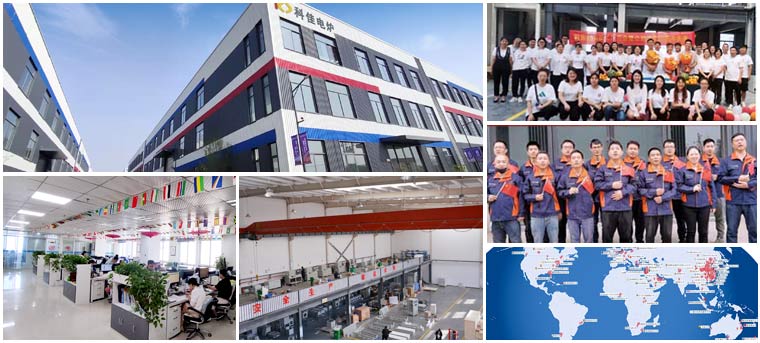
Zhengzhou Kejia Technology Co., Ltd. is a high-tech enterprise specializing in R&D and sales of heat treatment products, including muffle furnaces, tube furnaces, vacuum furnaces and more, widely used in metallurgy, ceramic sintering, battery materials, semiconductors, aerospace and other fields.
For inquiries and customized solutions, contact us via WhatsApp: +86 18037178440 or Email: web@kejiafurnace.com.
 English
 简体中文
简体中文 Русский язык
 Français
 日本語
日本語 한국어
한국어 Português
 Español
 Website navigation
 Position:








 Send E-mail:web@kejiafurnace.com
 Wechat/Whatsapp: +86 18037178440
 Company Tell: +(86)18037178440






 E-mail:web@kejiafurnace.com
 Tell:+(86) 18037178440
 Whatapp:+(86) 180-3717-8440
 Address:Room 1505, Building 9, No. 26 Dongqing Street, Zhengzhou High-tech Industrial Development Zone