Comparison of Different Biomass Pyrolysis Reactors: Fluidized Bed, Rotary Kiln and Fixed Bed Selecti
1. Significance of Reactor Type Selection for Biomass Pyrolysis1.1 Core Influence of Reactor Structure on Pyrolysis Quality
Biomass pyrolysis reactor is the core carrier of thermal decomposition reaction, and its structural type directly determines pyrolysis temperature field, material residence time, product yield and batch stability.
Biomass pyrolysis is a complex thermal chemical reaction process involving heat and mass transfer, molecular cracking and phase transformation. Different reactor structures form completely different heating modes, material mixing states and gas-solid reaction environments. Fixed bed, rotary kiln and fluidized bed are the three mainstream industrial pyrolysis reactor types. The structural differences lead to obvious differentiation in pyrolysis speed, biochar/bio-oil/pyrolysis gas yield ratio, raw material adaptability and operating cost. Reasonable reactor selection according to production orientation and raw material conditions is the premise of high-efficiency and low-cost biomass resource utilization.
1.2 Industrial Pain Points of Blind Reactor Selection
Blindly matching reactor types will lead to mismatched product output, low conversion rate, high energy consumption and frequent equipment failures, restricting industrial stable production.
In actual biomass energy projects, many production lines have problems such as low biochar yield, excessive tar residue, unstable pyrolysis gas calorific value and serious equipment wear, which are mostly caused by mismatched reactor types. For example, fluidized bed reactors with high pretreatment requirements are used for miscellaneous raw materials with uneven particle size; fixed bed intermittent equipment is used for large-scale continuous production; rotary kilns pursuing multi-product balance are used for single high-purity bio-oil production. Unreasonable selection causes waste of equipment investment, unstable product quality and poor project economic benefits.
1.3 Technical Positioning of Three Mainstream Reactors
Fixed bed focuses on high-quality biochar, rotary kiln focuses on multi-scene universal continuous production, and fluidized bed focuses on high-yield bio-oil and high-efficiency gas production.
The three types of reactors form a differentiated industrial matching system. Fixed bed pyrolysis adopts slow pyrolysis mode with long material residence time, which is suitable for high-quality biochar preparation. Rotary kiln relies on flexible adjustable residence time and strong raw material adaptability, covering most biomass raw materials and multi-product balanced output scenarios. Fluidized bed realizes rapid pyrolysis through uniform fluidization heat transfer, which is the core equipment for industrial high-yield bio-oil and clean pyrolysis gas production. Clarifying the differentiated advantages of each equipment is the core basis for engineering selection.
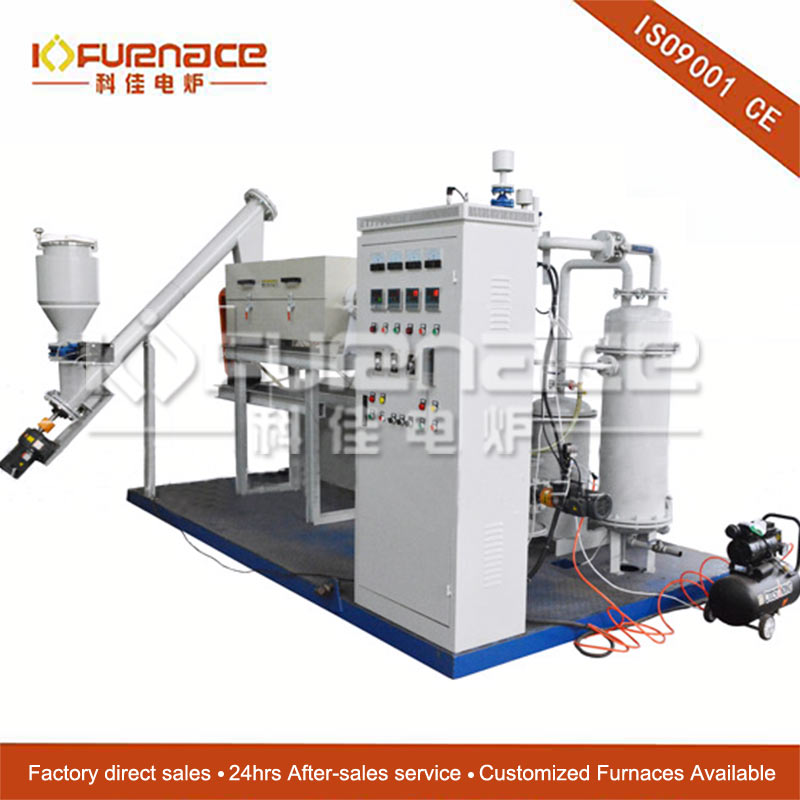
Fixed bed reactor adopts static stacking slow pyrolysis mode, with layered static reaction, low running speed, high carbon fixation rate and excellent finished carbon quality.
The fixed bed reactor is composed of a sealed furnace body, layered material rack, static heating system and intermittent feeding and discharging structure. The biomass raw materials are stacked in the bed layer in a static state, and the furnace body is heated by radiation and heat conduction. Under the conditions of low oxygen and normal pressure, the materials undergo slow thermal decomposition with a pyrolysis residence time of 2–6 hours. The static bed layer avoids material violent flipping and powdering, the volatile components are precipitated stably, and the fixed carbon is fully retained. It has the characteristics of simple structure, low equipment wear, low failure rate and high biochar purity. The disadvantage is that it can only operate intermittently, with low single-line output and strict requirements on raw material particle size and uniformity.
2.2 Rotary Kiln Biomass Pyrolysis Reactor
Rotary kiln relies on inclined rotary cylinder to realize continuous material turnover and propulsion, with ultra-wide raw material adaptability and flexible process adjustment.
The rotary kiln reactor takes the inclined rotatable cylinder as the core structure, equipped with sealed feeding and discharging device and external heating system. During operation, the cylinder rotates slowly to drive the biomass materials to flip, mix and advance axially, realizing continuous dynamic pyrolysis reaction. By adjusting the rotating speed and inclination angle, the material residence time can be accurately controlled within 20–90 minutes. The equipment does not require strict raw material crushing and screening, and can adapt to wood chips, straw, branches and mixed biomass raw materials. It balances the output of biochar, bio-oil and pyrolysis gas, with strong production flexibility and stable continuous operation capability.
2.3 Fluidized Bed Biomass Pyrolysis Reactor
Fluidized bed reactor forms uniform fluidized bed through high-speed airflow, realizing rapid pyrolysis with uniform temperature and high heat transfer efficiency.
The fluidized bed reactor consists of a gas distribution system, fluidized bed reaction chamber, cyclone separation device and circulating heating system. Uniform biomass fine particles are suspended and fluidized under the action of high-temperature carrier gas, forming a homogeneous gas-solid mixing state. The bed temperature is uniform and stable, the heat and mass transfer speed is fast, and the material completes rapid pyrolysis cracking in 2–10 seconds. It has the advantages of extremely high pyrolysis efficiency, large gas production volume and high bio-oil yield. However, it has high requirements on raw material particle fineness and uniformity, serious equipment abrasion, high operating power consumption and high later maintenance cost.3. Comprehensive Performance Comparison of Three Pyrolysis Reactors3.1 Raw Material Adaptability Comparison
Rotary kiln has the strongest raw material universality, fixed bed is suitable for high-uniformity raw materials, and fluidized bed is limited to fine particle raw materials.
Rotary kiln has no strict requirements on raw material particle size, shape and moisture, and can stably process block, strip, granular and mixed biomass raw materials, with extremely low pretreatment cost. Fixed bed requires raw materials to be evenly crushed and screened, and excessive fine powder will cause poor air permeability and incomplete pyrolysis. Fluidized bed requires raw materials to be finely crushed and uniformly graded, with strict control of particle size consistency, otherwise it will cause uneven fluidization, local dead bed and unstable reaction, and the pretreatment process is complicated and costly.
3.2 Product Yield and Quality Comparison
Fixed bed dominates high-quality biochar yield, fluidized bed dominates high bio-oil yield, and rotary kiln realizes balanced output of three products.
Fixed bed slow pyrolysis has a biochar yield of 30%–40%, with compact carbon structure, high fixed carbon content and stable performance, which is suitable for high-end soil improvement and industrial carbon materials. Fluidized bed rapid pyrolysis has a bio-oil yield of 60%–75%, with high liquid product purity and large gas production, which is suitable for bio-oil refining and gas power generation projects. Rotary kiln has balanced three-phase product yield, with biochar yield of 25%–35%, bio-oil yield of 40%–55% and stable pyrolysis gas calorific value, which can realize multi-product synchronous profit.
3.3 Production Efficiency and Operation Mode Comparison
Fluidized bed has the highest instantaneous efficiency, rotary kiln has the best continuous production stability, and fixed bed is suitable for small-batch intermittent production.
Fluidized bed realizes ultra-fast pyrolysis with high single-hour processing capacity, but it needs long-term stable carrier gas supply and precise parameter control, and the start-stop process is complicated. Rotary kiln supports 24-hour continuous unattended production, with stable material propulsion and uniform reaction, and the batch production consistency is excellent. Fixed bed adopts intermittent feeding and discharging, with long single-batch cycle and low annual total output, which is unable to adapt to large-scale industrial continuous production rhythm.
3.4 Energy Consumption, Investment and Maintenance Cost Comparison
Fixed bed has low comprehensive cost, rotary kiln has moderate investment and stable operation, and fluidized bed has high initial investment and high maintenance cost.
Fixed bed has simple equipment structure, low initial investment, low power consumption and almost no wearing parts, with ultra-low later maintenance cost. Rotary kiln has moderate equipment investment, stable operation energy consumption, only regular maintenance of rotary support and sealing parts, and low comprehensive operating cost. Fluidized bed has complex system configuration, high equipment manufacturing precision requirements, high fan power consumption and serious particle abrasion on the furnace body and separation system, with high initial investment and high later replacement and maintenance costs.
3.5 Operational Stability and Safety Comparison
Fixed bed has high operational safety, rotary kiln has stable and controllable operation, and fluidized bed has high parameter control requirements.
Fixed bed static reaction has no material flipping and high-speed gas flow, stable furnace pressure, low risk of deflagration and leakage, and high operational safety. Rotary kiln has mature sealing and transmission structure, stable internal atmosphere, adjustable operation parameters and low failure rate. Fluidized bed relies on high-speed airflow fluidization, with sensitive furnace pressure and temperature changes, high requirements for automatic control system, and certain risks of bed collapse and unstable fluidization if parameters deviate.4. Industrial Scenario Classification Selection Guide4.1 Fixed Bed Reactor Priority Selection Scenarios
Small and medium-sized projects focusing on high-purity high-quality biochar, with limited investment and low continuous production requirements.
It is preferred to select fixed bed pyrolysis reactors for scenarios such as agricultural soil improvement biochar production, small-scale workshop carbon material processing, and laboratory pilot pyrolysis experiments. This type of project takes high-quality biochar as the core profit point, with low requirements for bio-oil and gas output. Fixed bed equipment has low investment cost, simple operation, low failure rate and high carbon product qualification rate, which can perfectly match small-batch, high-quality customized production needs. It is not suitable for large-scale industrial continuous production and raw material mixed processing scenarios.
4.2 Rotary Kiln Reactor Priority Selection Scenarios
Large and medium-sized continuous production projects with mixed raw materials and balanced output of carbon, oil and gas products.
Rotary kiln is the first choice for large-scale biomass comprehensive utilization projects, rural domestic waste and agricultural and forestry waste centralized treatment projects, and multi-product co-production industrial lines. It can adapt to complex and variable raw material types, realize 24-hour continuous stable operation, balance the yield of three-phase products, and maximize project comprehensive benefits. The equipment has strong scalability, flexible process adjustment and stable batch quality, which is suitable for commercial projects with high requirements for production continuity and raw material universality.
4.3 Fluidized Bed Reactor Priority Selection Scenarios
Large-scale industrial projects focusing on bio-oil refining and pyrolysis gas power generation, with sufficient raw material pretreatment conditions.
Fluidized bed reactors are suitable for high-end bio-oil deep processing, biomass gas power generation, large-scale industrial centralized energy supply and other scenarios. This type of project takes high-yield liquid oil and clean combustible gas as the core output, and has supporting professional crushing and screening pretreatment systems. Fluidized bed ultra-fast pyrolysis can maximize liquid product yield and gas production efficiency, with high industrial added value. It is not suitable for projects with insufficient pretreatment capacity, mixed raw materials and low budget.5. Common Selection Mistakes and Optimization Suggestions5.1 Common Selection Mistakes in Engineering
Blindly pursuing high efficiency and high output, ignoring raw material matching and product positioning, leading to low project return on investment.
The main mistakes in actual reactor selection include: selecting high-cost fluidized bed for single biochar production projects, resulting in idle equipment performance and high energy consumption loss; selecting fixed bed intermittent equipment for large-scale continuous production, restricting production capacity release; selecting precision fluidized bed equipment for unprocessed mixed raw materials, causing unstable fluidization and frequent failures; ignoring later maintenance costs and only focusing on initial investment, resulting in high long-term operating costs.
5.2 Targeted Selection Optimization Principles
Take product positioning as the core, raw material status as the premise, and production scale as the standard to realize accurate matching of reactor types.
First, clarify the core product orientation: choose fixed bed for high-quality biochar priority, fluidized bed for bio-oil and gas priority, and rotary kiln for balanced co-production. Second, match according to raw material conditions: choose rotary kiln for mixed and irregular raw materials, fixed bed for uniform block raw materials, and fluidized bed for fine particle raw materials after fine processing. Third, select according to production scale: small and medium-sized intermittent production matches fixed bed, medium and large continuous comprehensive production matches rotary kiln, and large-scale high-end refined production matches fluidized bed.6. Industry Development Trend and Technical Iteration ProspectThree types of pyrolysis reactors are developing in a differentiated and refined manner, and the matching degree of equipment and industrial scenarios is continuously improved.
With the continuous upgrading of biomass energy industry towards high-value utilization and refined production, the three mainstream reactors are constantly optimizing their structural advantages. Fixed bed is developing towards intelligent temperature control and batch automatic switching to solve the problem of intermittent production efficiency. Rotary kiln is iterating towards precise speed regulation, sealed energy saving and multi-stage temperature zoning to improve multi-product balance yield. Fluidized bed is optimizing raw material adaptability and reducing abrasion and energy consumption, reducing pretreatment threshold and maintenance cost.
Intelligent compound pyrolysis equipment will become the future development direction to realize full-scene efficient utilization of biomass resources.
In the future, the single structural limitation of traditional reactors will be broken. Compound equipment integrating the advantages of fixed bed carbon fixation, rotary kiln continuous production and fluidized bed efficient heat transfer will gradually enter the market. Through intelligent parameter switching and structural adaptive adjustment, it will adapt to variable raw materials and multi-product flexible production, further improve biomass conversion rate and product added value, and promote the high-quality and efficient development of the whole biomass pyrolysis industry.
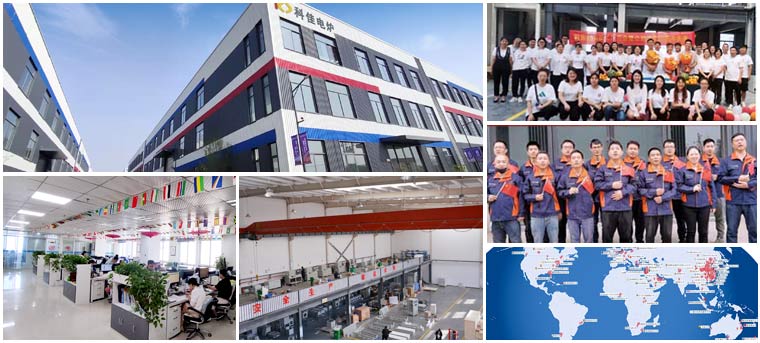
Zhengzhou KJ Technology Co., Ltd. is a high-tech enterprise specializing in the research, development and sales of heat treatment products. Our products cover muffle furnaces, tube furnaces, vacuum furnaces, atmosphere furnaces, CVD/PECVD systems, dental furnaces, bell type furnaces , trolley furnaces, etc., which are widely used in metallurgy, vacuum brazing, ceramic sintering, battery materials, metal processing , parts annealing, additive manufacturing, semiconductors, scientific intelligent instrumentation, aerospace and industrial automatic control systems and other different fields.
For inquiries and customized solutions, please feel free to contact us.
WhatsApp: +86 18037178440
Email: web@kejiafurnace.com
 English
 简体中文
简体中文 Русский язык
 Français
 日本語
日本語 한국어
한국어 Português
 Español
 Website navigation
 Position:








 Send E-mail:web@kejiafurnace.com
 Wechat/Whatsapp: +86 18037178440
 Company Tell: +(86)18037178440




 E-mail:web@kejiafurnace.com
 Tell:+(86) 18037178440
 Whatapp:+(86) 180-3717-8440
 Address:Room 1505, Building 9, No. 26 Dongqing Street, Zhengzhou High-tech Industrial Development Zone