Agricultural and Forestry Solid Waste Resource Utilization via Biomass Pyrolysis Technology
1. Industry Background: Necessity and Technical Value of Agricultural and Forestry Solid Waste Resource Utilization1.1 Current Situation and Environmental Pressure of Agricultural and Forestry Waste
Agricultural and forestry solid waste represented by crop straw, fruit tree branches, wood chips and bark has huge output and low comprehensive utilization rate, bringing prominent environmental pollution and resource waste problems.
China produces more than 1 billion tons of agricultural and forestry biomass waste every year, including rice husks, corn stalks, wheat straw, forest pruning branches, wood processing residues and other materials. Most of the wastes are disposed of by open burning, random stacking and landfill, which not only occupies land resources and breeds bacteria, but also produces a large amount of smoke, dust and harmful gases during burning, aggravating air pollution and carbon emission pressure. Traditional resource utilization methods such as direct combustion power generation and simple composting have low added value, serious energy loss and limited treatment capacity, which cannot meet the requirements of green environmental protection and circular economy development.
1.2 Core Advantages of Pyrolysis and Cogeneration Technology
Biomass pyrolysis cogeneration technology realizes full-component conversion of agricultural and forestry waste, and synchronously obtains high-value solid, liquid and gaseous products, which is the optimal technical path for waste recycling.
Different from single waste treatment technology, limited-oxygen pyrolysis cracking technology can convert lignocellulosic biomass waste into three high-value products: solid biochar, liquid bio-oil and gaseous combustible syngas in one furnace. This technology realizes harmless reduction treatment of agricultural and forestry waste on the one hand, and completes resource recycling and high-value utilization on the other hand. It solves the pain points of single product, low utilization rate and poor economic benefit of traditional biomass treatment, and realizes the dual goals of environmental governance and industrial profit creation.
1.3 Industrial Application Orientation of Three Pyrolysis Products
Biochar focuses on ecological improvement and carbon sequestration, bio-oil focuses on clean fuel and fine chemical raw materials, and combustible syngas focuses on on-site energy supply and clean power generation.
The three-phase products of agricultural and forestry waste pyrolysis have clear industrial positioning and wide application scenarios. Biochar has porous structure and strong adsorption performance, which can be used for soil improvement, heavy metal adsorption, carbon sink sequestration and industrial adsorption materials. Bio-oil can be upgraded and refined into clean fuel, or extracted into high-value chemical products such as phenols and esters. Combustible syngas composed of CO, H₂, CH₄ can be used for on-site furnace heating, power generation and energy supply, realizing self-sufficient system energy and reducing external energy consumption.
Under oxygen-limited and high-temperature conditions, cellulose, hemicellulose and lignin in agricultural and forestry waste undergo staged cracking, polymerization and secondary reforming to form three-phase products.
Agricultural and forestry biomass is mainly composed of three organic components with different thermal stability. Hemicellulose is the first to decompose at 200–350℃ to generate volatile gas and small molecular tar; cellulose cracks massively at 300–450℃ to produce a large number of liquid precursors and combustible gases; lignin has a wide pyrolysis temperature range of 160–900℃, which is the main source of biochar and heavy tar. Under the precise control of temperature, heating rate and residence time, the three components complete staged pyrolysis, realizing directional distribution of solid, liquid and gaseous products, and avoiding waste caused by excessive single product and insufficient conversion of other products.
2.2 Standard Industrial Cogeneration Process Flow
The whole process includes raw material pretreatment, feeding pyrolysis, gas-solid-liquid separation, product collection and flue gas purification, realizing closed-loop and clean production.
The complete process of agricultural and forestry waste pyrolysis cogeneration is divided into five core links. First, raw material pretreatment: crushing, screening and drying of straw, branches and wood chips to control particle size and moisture to meet pyrolysis feeding standards. Second, sealed feeding and pyrolysis: materials enter the pyrolysis furnace for oxygen-limited heating, and complete staged thermal decomposition under set process parameters. Third, gas-solid separation: high-temperature flue gas and solid biochar are separated, and biochar is cooled and collected. Fourth, condensation separation: tar volatile components are condensed into liquid bio-oil through multi-stage cooling, and non-condensable gas is collected as combustible syngas. Fifth, tail gas purification and recycling: residual waste gas and impurities are treated to meet environmental protection standards, and qualified syngas is recycled for furnace heating to reduce energy consumption.
2.3 Key Technical Points of Furnace Operation
Oxygen-limited atmosphere, staged temperature control and dynamic residence time adjustment are the three core guarantees for stable cogeneration efficiency.
In the industrial operation of pyrolysis furnaces, strict oxygen isolation is required to prevent materials from burning in large quantities and causing carbon loss and oil-gas yield reduction. Adopt segmented temperature control strategy: low temperature drying and devolatilization, medium temperature main pyrolysis product formation, high temperature secondary reforming and impurity removal. According to raw material types and target product orientation, dynamically adjust solid material residence time and flue gas vapor residence time to avoid incomplete primary pyrolysis or excessive secondary cracking, so as to ensure stable yield and uniform quality of biochar, bio-oil and syngas.3. Characteristics and Industrial Value of Three Pyrolysis and Cogeneration Products3.1 Biochar: High-Value Carbon Sequestration and Ecological Restoration Material
Agricultural and forestry waste biochar has developed porous structure, high fixed carbon content and strong stability, with dual value of ecological environmental protection and agricultural production.
Biochar prepared from agricultural and forestry waste pyrolysis has a fixed carbon content of more than 70% and a porous specific surface area, which can improve soil porosity, retain water and fertilizer, and promote crop growth when applied to farmland. At the same time, biochar has strong adsorption capacity for heavy metal ions and organic pollutants, and can be used for soil remediation and sewage treatment. In addition, biochar can realize long-term carbon sequestration, effectively reduce atmospheric carbon concentration, and provide reliable carbon sink resources for agricultural carbon reduction projects. Slow pyrolysis at 350–450℃ is the optimal process for high-yield and high-quality biochar production, with a yield of 30%–40%.
3.2 Bio-Oil: Renewable Clean Liquid Fuel and Chemical Precursor
Bio-oil derived from agricultural and forestry waste pyrolysis has renewable and clean characteristics, and can be upgraded to replace fossil fuels and extract high-value chemicals.
Bio-oil is a brown-black viscous liquid condensed from biomass volatile components, rich in phenols, esters, alcohols and other organic components. After impurity removal, dehydration and upgrading, it can be used as industrial clean fuel to replace diesel and heavy oil, reducing fossil energy consumption. Through fine separation and purification, high-value chemical raw materials such as biomass phenol and industrial acetic acid can be extracted, which is widely used in chemical, coating and new material industries. Medium-temperature fast pyrolysis at 450–550℃ can maximize bio-oil yield, with the highest industrial yield reaching 60%–75%.
3.3 Combustible Syngas: On-Site Clean Energy Supply Medium
Pyrolysis syngas is composed of hydrogen, carbon monoxide and methane, with stable calorific value and clean combustion, realizing self-sufficient energy for pyrolysis system.
The non-condensable gas generated by agricultural and forestry waste pyrolysis is high-quality combustible syngas, with a calorific value stable at 12–18 MJ/m³. It can be directly used for pyrolysis furnace heating, drying raw materials, on-site power generation and boiler energy supply, completely replacing traditional coal and natural gas. High-temperature deep pyrolysis above 600℃ can significantly increase the proportion of small-molecule combustible gas, reduce tar content in flue gas, and improve gas purity and combustion stability. The excess syngas can also be connected to the grid for power generation or supplied to surrounding industrial users, realizing secondary profit.4. Process Parameter Coupling and Directional Product Regulation Technology4.1 Adaptability of Different Agricultural and Forestry Raw Materials to Pyrolysis Process
Woody biomass is suitable for high-quality biochar and bio-oil production, and herbaceous straw biomass is more suitable for high-efficiency syngas cogeneration.
Woody wastes such as branches, wood chips and bark have high lignin content, stable structure and high fixed carbon conversion rate, which are suitable for preparing high-density high-quality biochar and high-purity bio-oil. Herbaceous wastes such as rice straw and corn stalks have high cellulose and hemicellulose content, fast pyrolysis speed and rich volatile components, which are conducive to improving syngas and bio-oil yield. For mixed agricultural and forestry wastes, segmented variable heating and dynamic residence time matching are required to balance the yield and quality of three-phase products.
4.2 Directional Cogeneration Parameter Matching Scheme
Realize flexible switching of product proportion through precise coupling of temperature, heating rate and residence time to adapt to different market demand scenarios.
For ecological projects focusing on biochar benefits: control pyrolysis temperature at 350–450℃, slow heating rate of 0.5–1℃/min, and long solid residence time, to ensure high biochar yield and stable structure. For chemical projects focusing on bio-oil refining: adopt medium temperature of 450–550℃, fast heating, and ultra-short vapor residence time to inhibit tar secondary cracking and maximize liquid yield. For energy supply projects focusing on syngas power generation: adopt high temperature of 600–800℃, staged heating and extended vapor residence time to strengthen volatile reforming and improve gas calorific value.
4.3 Key Optimization Technology for Cogeneration Balance
Multi-zone independent temperature control and staged pyrolysis technology solve the problem of unbalanced three-phase product yield in traditional single-temperature pyrolysis.
The traditional single-temperature pyrolysis process is prone to the defects of excessive single product and insufficient conversion of other products. The optimized multi-zone staged pyrolysis technology realizes independent temperature regulation in drying zone, pyrolysis zone and refining zone. The low-temperature zone completes material dehydration and devolatilization, the medium-temperature zone completes main product formation, and the high-temperature zone completes gas-phase reforming and impurity removal. This technology effectively improves the comprehensive utilization rate of agricultural and forestry waste, realizes balanced output of carbon, oil and gas, and maximizes the overall economic benefit of the project.5. Classification and Adaptability of Cogeneration Pyrolysis Furnace Equipment5.1 Fixed Bed Pyrolysis Furnace: Suitable for Small-Scale High-Quality Biochar Cogeneration
Fixed bed equipment has simple structure and stable carbon formation, which is suitable for decentralized small-scale treatment of agricultural and forestry waste and high-quality biochar oriented production.
Fixed bed pyrolysis furnace has low investment and simple operation, stable static pyrolysis reaction and high biochar qualification rate. It is suitable for small-scale waste treatment scenarios such as rural scattered straw and orchard branch disposal. The product is dominated by high-quality biochar, supplemented by moderate bio-oil and syngas. The equipment has low pretreatment requirements for regular block and particle raw materials, low failure rate and stable operation, and is very suitable for rural distributed resource utilization projects.
5.2 Rotary Kiln Pyrolysis Furnace: Universal Equipment for Large-Scale Balanced Cogeneration
Rotary kiln has strong raw material adaptability and continuous production capacity, which is the mainstream equipment for large-scale centralized treatment of agricultural and forestry waste.
Rotary kiln pyrolysis furnace can adapt to mixed raw materials such as straw, branches and wood chips without fine pretreatment, and supports 24-hour continuous stable production. The product yield ratio is flexible and adjustable, which can realize balanced cogeneration of carbon, oil and gas. It is the preferred equipment for large-scale agricultural and forestry waste centralized treatment bases and industrial comprehensive utilization projects, with high production efficiency and strong project scalability.
5.3 Fluidized Bed Pyrolysis Furnace: High-Efficiency Equipment for Oil and Gas Priority Cogeneration
Fluidized bed has uniform temperature and fast pyrolysis speed, which is suitable for large-scale high-yield bio-oil and syngas fine chemical projects.
Fluidized bed pyrolysis furnace has high heat transfer efficiency and fast reaction speed, which can maximize the yield of bio-oil and syngas. It is suitable for large-scale industrial projects with sufficient raw material pretreatment conditions and focusing on high-value oil and gas products. The equipment has high production intensity and good product uniformity, and is widely used in biomass fine chemical processing and clean energy centralized supply projects.6. Industrial Pain Points, Optimization Schemes and Environmental Benefit Analysis6.1 Common Technical Bottlenecks in Cogeneration Production
Unreasonable parameter matching, insufficient raw material pretreatment and imperfect tail gas purification restrict the improvement of cogeneration efficiency and environmental protection level.
At present, the common problems in industrial cogeneration of agricultural and forestry waste are as follows: fixed parameter operation leads to unbalanced product yield; insufficient raw material drying and crushing lead to incomplete pyrolysis and many impurities; simple condensation process leads to low bio-oil purity; tail gas cleaning system is not perfect, resulting in trace tar emission exceeding the standard. These bottlenecks affect product quality stability and project environmental protection compliance, restricting the large-scale promotion of cogeneration technology.
6.2 Comprehensive Process Optimization and Upgrading Scheme
Optimize pretreatment system, staged pyrolysis process and multi-stage purification technology to realize high-efficiency, clean and high-value cogeneration.
First, build a standardized pretreatment system to realize automatic crushing, screening and drying of raw materials to ensure uniform feeding quality. Second, adopt intelligent staged pyrolysis and dynamic parameter adjustment to realize directional regulation of three-phase products. Third, upgrade multi-stage condensation and oil-water separation technology to improve bio-oil purity and reduce impurity content. Fourth, equip with perfect tail gas purification and waste heat recovery system to realize full recycling of waste heat and zero discharge of environmental protection, and comprehensively improve the level of resource utilization and clean production.
6.3 Environmental Protection and Economic Dual Benefits
Pyrolysis cogeneration technology realizes waste reduction, harmlessness and resource utilization, with prominent ecological benefits and stable industrial profit space.
In terms of environmental benefits, this technology completely solves the pollution problem of agricultural and forestry waste stacking and burning, reduces carbon emission and smoke and dust pollution, and realizes waste reduction and harmless treatment. In terms of economic benefits, the three-phase products cover agricultural ecology, clean energy and fine chemical industries, with diverse profit points and strong anti-risk ability. The self-supply of pyrolysis syngas reduces operating energy consumption, and the multi-product joint output significantly improves the comprehensive income of the project, which is suitable for large-scale industrial promotion and rural ecological revitalization projects.7. Technology Iteration and Industry Development TrendIntelligent directional pyrolysis and high-end product upgrading have become the main development direction of agricultural and forestry solid waste resource utilization.
With the continuous improvement of national requirements for solid waste environmental treatment and circular economy, agricultural and forestry waste pyrolysis cogeneration technology is iterating from extensive balanced production to intelligent directional regulation. The industry is gradually eliminating backward fixed-process and low-efficiency equipment, and developing towards multi-parameter intelligent linkage, flexible product switching, high-purity product refining and ultra-clean environmental protection production.
Multi-product high-value co-production and industrial chain extension will further release the industrial value of biomass waste resources.
In the future, on the basis of stable cogeneration of carbon, oil and gas, the industry will extend the industrial chain to high-end fields such as modified biochar soil remediation materials, bio-oil deep refining chemicals and high-purity syngas power generation. Through the integration of intelligent equipment, fine process and high-value products, the resource utilization rate and industrial added value of agricultural and forestry solid waste will be comprehensively improved, helping the green and low-carbon development of agriculture and rural areas and the high-quality upgrading of biomass energy industry.
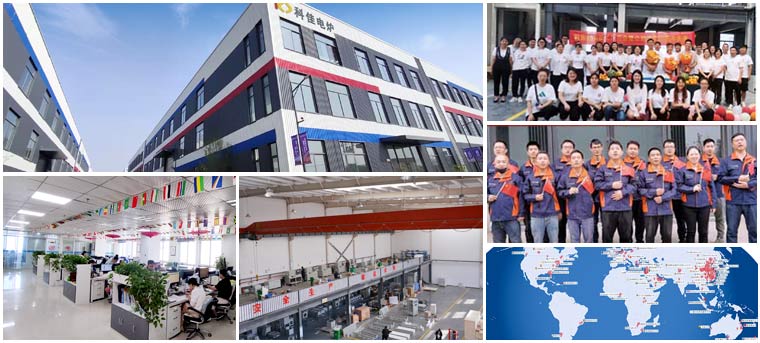
Zhengzhou Kejia Technology Co., Ltd. is a high-tech enterprise specializing in R&D and sales of heat treatment products, including muffle furnaces, tube furnaces, vacuum furnaces and more, widely used in metallurgy, ceramic sintering, battery materials, semiconductors, aerospace and other fields.
For inquiries and customized solutions, contact us via WhatsApp: +86 18037178440 or Email: web@kejiafurnace.com.
 English
 简体中文
简体中文 Русский язык
 Français
 日本語
日本語 한국어
한국어 Português
 Español
 Website navigation
 Position:








 Send E-mail:web@kejiafurnace.com
 Wechat/Whatsapp: +86 18037178440
 Company Tell: +(86)18037178440






 E-mail:web@kejiafurnace.com
 Tell:+(86) 18037178440
 Whatapp:+(86) 180-3717-8440
 Address:Room 1505, Building 9, No. 26 Dongqing Street, Zhengzhou High-tech Industrial Development Zone