Porous Carbon Steam Activation Rotary Kiln: Continuous Production & Quality Improvement
1. Industry Background: Pain Points of Traditional Intermittent Porous Carbon Activation Production1.1 Application Value and Industry Status of Porous Carbon Materials
Porous carbon steam activation rotary kiln is a specialized thermal processing device that solves the bottlenecks of intermittent porous carbon production. It enables full continuous production and effectively stabilizes the pore structure and overall quality of finished porous carbon products.
As a high-performance functional carbon material, porous carbon gains its microporous and mesoporous structure through high-temperature steam activation. Its adsorption capacity, specific surface area and pore uniformity determine its performance in water treatment, waste gas purification, lithium battery electrodes and food decolorization. Most small and medium carbon manufacturers still adopt traditional intermittent furnaces such as box kilns and fixed bed furnaces. This outdated production method severely restricts product quality improvement and enterprise capacity expansion.
1.2 Quality Defects Caused by Intermittent Production Mode
Intermittent production causes unstable activation temperatures and uneven steam intake, resulting in inconsistent pore size distribution and fluctuating adsorption indicators of porous carbon products. Traditional batch furnaces require repeated feeding, heating, activation, cooling, discharging and cleaning for every production cycle. The mandatory cooling and reheating process leads to unstable furnace temperatures and disordered steam distribution. Carbon-steam reaction degrees vary in different furnace zones, causing significant deviations in iodine value and methylene blue index between batches, which increases downstream quality inspection risks.
1.3 Cost and Capacity Bottlenecks of Traditional Equipment
Frequent startup and shutdown of intermittent furnaces leads to excessive fuel consumption and high labor costs, limiting production expansion and standardized quality control. Repeated heating from room temperature to over 800℃ produces massive invalid heat loss and raises unit fuel consumption. In addition, batch feeding and discharging rely heavily on manual operation and 24-hour on-site monitoring, further increasing production costs. Due to structural limitations, intermittent equipment only supports small-batch discontinuous production, failing to meet large-scale order demands from new energy and environmental protection enterprises.
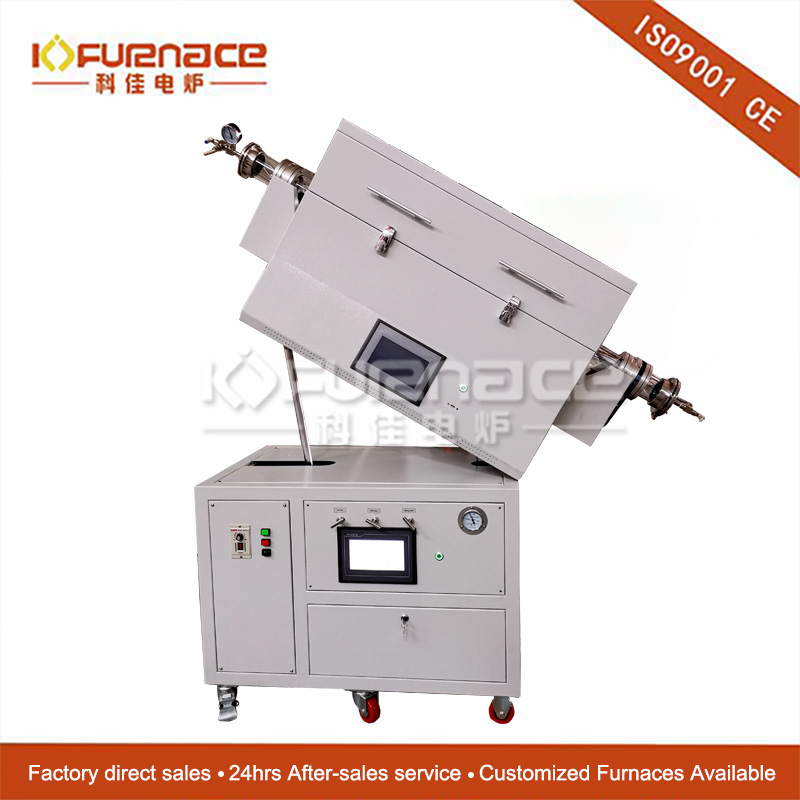
Continuous feeding, high-temperature activation and continuous discharging are the core advantages of the porous carbon steam activation rotary kiln for streamlined mass production. The complete production line consists of a quantitative feeding system, horizontal rotary furnace, steam distribution pipeline, high-temperature activation section, cooling discharging device and flue gas waste heat recovery system, forming an integrated closed-loop production unit without intermediate material transfer.
The cylindrical furnace body operates at an adjustable low rotating speed, pushing raw carbon materials steadily from the feed end to the discharge end. Driven by a variable-frequency motor, the furnace speed can be adjusted between 0.5r/min and 3r/min to match different process requirements. Sealed spiral feeding prevents cold air infiltration and ensures stable internal temperature. During operation, materials roll forward spirally inside the hearth without accumulation or local overheating.
High-temperature saturated steam is quantitatively injected into the activation section through evenly arranged multi-directional nozzles. Heated to 300℃~450℃, steam fully contacts with carbon particles during continuous rolling and flipping. This dynamic reaction mode solves the uneven steam contact problem of static intermittent furnaces. Raw carbon completes carbonization and steam activation in one continuous process without repeated cooling and reheating, realizing seamless production from raw material input to finished product output.
2.2 Closed-loop automatic control system stabilizes internal activation environment
Precise closed-loop control of temperature and steam dosage greatly improves porous carbon’s physical indicators and batch consistency. Equipped with a complete PLC automatic control system, the rotary kiln supports real-time multi-point temperature detection, steam flow monitoring, frequency conversion speed regulation and flue gas pressure linkage control. All process parameters are visualized and adjustable through the central control cabinet.
High-precision thermocouples monitor the temperature of the preheating, carbonization and activation sections in real time, controlling activation temperature deviation within ±5℃. The system automatically adjusts burner power and steam injection volume according to raw material carbon content. A stable activation environment accurately guides the formation of micropores and mesopores, effectively reducing the disqualification rate of key indicators including iodine value, methylene blue adsorption value and specific surface area.3. Economic & Structural Advantages of Steam Activation Rotary Kiln Equipment3.1 Waste heat recycling structure reduces overall energy consumption of production line
The rotary kiln’s optimized energy-saving structure reduces comprehensive production costs while ensuring stable continuous production and high-quality outputs. Its energy efficiency design mainly focuses on furnace body heat preservation and flue gas waste heat recycling, effectively lowering long-term operational costs for carbon manufacturers.
The furnace shell adopts multi-layer refractory and thermal insulation materials to minimize surface heat loss, keeping the shell temperature below 60℃. High-temperature flue gas waste heat is recycled to produce activation steam and pre-dry raw carbon materials, eliminating extra fuel consumption for raw material drying. Compared with traditional intermittent furnaces of the same output, the continuous rotary kiln saves 20%~30% fuel consumption per ton of products, delivering significant economic energy-saving benefits.
3.2 Modular customized design matches diversified raw material processing requirements
The modular customized design enables the rotary kiln to adapt to diverse porous carbon production requirements for different raw materials. Coal-based carbon, coconut shell carbon and wood-based carbon differ greatly in fixed carbon content, ash content and volatile components, requiring targeted adjustments to furnace structure and process parameters.
Manufacturers can customize the kiln length, inner diameter, rotating speed and steam distribution structure according to raw material characteristics. The equipment extends activation time for slow-reacting coal-based carbon and optimizes steam injection density for easily activated coconut shell carbon. It can flexibly produce food-grade decolorizing carbon, industrial adsorption carbon and capacitor porous carbon, improving equipment utilization and product layout flexibility.4. Industry Development Prospect of Continuous Porous Carbon Activation Rotary KilnWith the upgrading of downstream industries, continuous steam activation rotary kilns are gradually replacing traditional intermittent furnaces and becoming mainstream equipment for high-end porous carbon production. Booming demands from lithium batteries, environmental governance and food processing industries require porous carbon products with higher purity, better consistency and more stable adsorption performance, forcing manufacturers to phase out backward intermittent production lines.
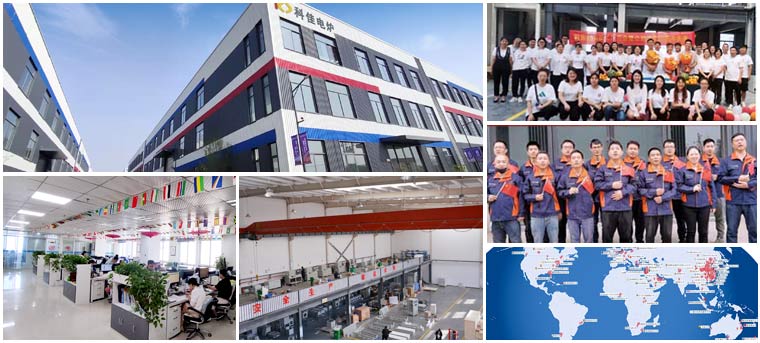
Driven by the market demand for high-quality porous carbon, continuous rotary kilns have become the preferred solution for large-scale standardized production. With the continuous innovation of thermal engineering and intelligent control technology, modern rotary kilns will realize unmanned intelligent production, further improving activation efficiency and product stability, and supporting the industrialized production of high-end porous carbon materials.Zhengzhou Kejia Technology Co., Ltd. is a high-tech enterprise specializing in R&D and sales of heat treatment products, including muffle furnaces, tube furnaces, vacuum furnaces and more, widely used in metallurgy, ceramic sintering, battery materials, semiconductors, aerospace and other fields.
For inquiries and customized solutions, contact us via WhatsApp: +86 18037178440 or Email: web@kejiafurnace.com.
 English
 简体中文
简体中文 Русский язык
 Français
 日本語
日本語 한국어
한국어 Português
 Español
 Website navigation
 Position:








 Send E-mail:web@kejiafurnace.com
 Wechat/Whatsapp: +86 18037178440
 Company Tell: +(86)18037178440



 E-mail:web@kejiafurnace.com
 Tell:+(86) 18037178440
 Whatapp:+(86) 180-3717-8440
 Address:Room 1505, Building 9, No. 26 Dongqing Street, Zhengzhou High-tech Industrial Development Zone