Design and Optimization of Temperature Curve for Vacuum Brazing Furnace
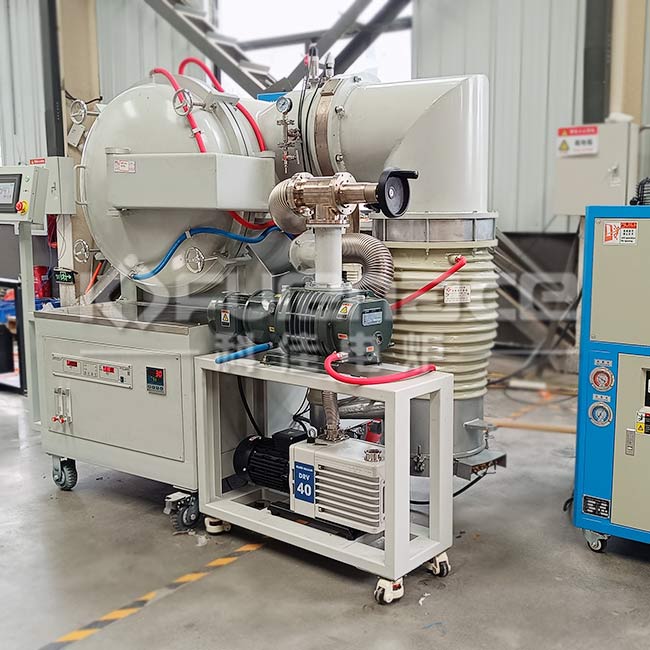
Vacuum brazing has become the core process for connecting precision components in aerospace, new energy, high-end electronics and other fields, thanks to its advantages of oxidation-free, dense weld seam and high joint strength. As the core of the process, the temperature curve of vacuum brazing furnace directly determines brazing quality, workpiece performance and product qualification rate, depending on its rational design and temperature control accuracy. The curve consists of three core stages: heating, holding and cooling, whose parameters should be dynamically adjusted according to brazing filler metal characteristics, base metal type, workpiece structure and furnace load, so as to achieve dual improvement of quality and efficiency based on scientific optimization principles. This paper elaborates the control points, optimization logic and technology trends of each stage, providing technical reference for actual production.I. Core Composition and Control Points of Vacuum Brazing Furnace Temperature CurveThe three stages of the temperature curve are closely linked, and refined parameter control is the key to avoiding defects such as cracks, pores and uneven spreading of brazing filler metal, balancing process safety and production efficiency.
The core of heating is to steadily heat the workpiece to brazing temperature, minimize thermal stress and prevent cracking caused by material expansion differences. The heating rate is controlled at 5-20℃/min under conventional working conditions, and reduced to 2-5℃/min for thermal-sensitive materials such as ceramic-metal composites and thin-walled precision parts to reduce internal and external temperature differences.
The furnace temperature uniformity should be controlled within ±10℃ during the whole heating process, and strictly within ±5℃ in the key interval of 100℃ before brazing temperature to ensure uniform heating of the workpiece. The "slow-medium-fast" step heating strategy is recommended: the slow section fully degasses to reduce pores, the medium section relieves thermal stress concentration, and the fast section improves efficiency and prevents abnormal grain growth of base metal.
(2) Holding Stage: Control the Core Link of Brazing Filler Metal Metallurgical Bonding
The holding stage is the key for brazing filler metal to melt, spread, wet and form metallurgical bonding with base metal, and parameter setting directly determines the density and strength of the joint. The holding temperature should be 10-50℃ higher than the liquidus of brazing filler metal, 50-70℃ higher than the melting point for single-element filler metal, and appropriately increased for multi-alloy filler metal, but must be lower than the melting point of base metal to avoid melting erosion and deformation.
The holding time is adapted as needed: 5-15 minutes for small and simple workpieces, extended to 30-60 minutes for large and complex components (such as aero-engine parts), and the duration should be calibrated through experiments when the furnace load changes. Temperature fluctuation during holding must be controlled within ±5℃ to avoid filler metal loss and insufficient melting.
(3) Cooling Stage: Reduce Residual Stress and Ensure Workpiece Stability
The core of cooling is to release residual stress steadily and prevent joint cracking and workpiece deformation. The cooling rate fits material characteristics: accelerated cooling for ordinary steel, slow cooling or segmented cooling for titanium alloy, superalloy and ceramic composites to avoid thermal shock.
Cooling methods include natural cooling and forced cooling: natural cooling has small thermal shock, suitable for precision workpieces but low efficiency; forced cooling is accelerated by filling high-purity nitrogen, suitable for mass production of ordinary parts, with strict control of inflation rate. Special materials require special control, such as titanium alloy should be slowly cooled to below 150℃ with furnace after brazing to avoid micro-cracks.II. Scientific Optimization Principles of Temperature CurveTemperature curve optimization takes "quality assurance, energy consumption reduction and efficiency improvement" as the core, formulating a systematic plan based on brazing filler metal, base metal and workpiece conditions, rejecting blind adjustment of single parameters.
(1) Temperature Setting Criteria
The holding temperature is based on the liquidus of brazing filler metal, balancing melting demand and base metal protection. It is strictly prohibited to exceed the base metal melting point and avoid the sensitization temperature interval to prevent performance degradation. Differentiate temperature setting for different filler metal types to ensure complete liquefaction and full wetting.
(2) Holding Time Optimization
Follow the principle of "shorten time under quality assurance", determine the duration combined with workpiece heat capacity, filler metal diffusion characteristics and furnace load. Extend appropriately for large, thick workpieces and high furnace load, shorten for small and thin workpieces. Optimal parameters can be locked through orthogonal experiments for standardized workpieces.
(3) Segmented Temperature Control Strategy
Adopt "slow-medium-fast" mode for heating and "fast-medium-slow" mode for cooling, accelerate at high temperature and slow down at medium and low temperature. Combined with furnace zonal heating, further reduce temperature difference to balance thermal stress control and efficiency improvement.III. New Trends of Process Development(1) Simplify Process: Abandon Step Heating
Traditional step heating is time-consuming and prone to vacuum fluctuation. The new process adopts slow continuous heating below 15℃/min, canceling holding platforms, which not only shortens the process cycle, but also reduces vacuum fluctuation and secondary thermal stress, improving product qualification rate.
(2) Strengthen Temperature Field Uniformity
Through zonal heating, real-time monitoring of multiple load couples, and dual temperature measurement of thermocouple and infrared, comprehensively control the furnace temperature field, reduce the local temperature difference of the workpiece to a smaller range, solve the problems of local overheating and uneven heating, and stabilize brazing quality.
(3) Intelligent Adaptive Temperature Control
Combined with finite element simulation and intelligent control system, realize rapid design and dynamic adaptation of temperature curve. The system can adjust parameters in real time according to furnace load, workpiece temperature and vacuum degree, replacing repeated experiments, reducing manual dependence, and adapting to the high-end manufacturing demand of multi-variety and small-batch production.IV. ConclusionThere is no universal standard for vacuum brazing furnace temperature curve. It is necessary to take brazing filler metal characteristics, base metal type, workpiece structure and furnace load as the core basis, and determine the optimal parameters through theoretical calculation, simulation and process experiments. The control of the three stages is indispensable, and any parameter deviation will affect the finished product quality.
With the development of high-end manufacturing and intelligent technology, temperature curve control is upgrading towards process simplification, precise temperature control and intelligent adaptation. In the future, it will further balance quality, efficiency and green manufacturing requirements, providing more reliable technical support for precision component brazing and helping high-end manufacturing industry improve quality and efficiency.
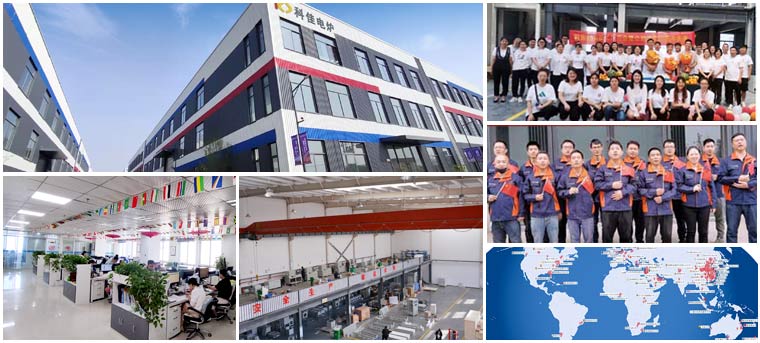
Zhengzhou KJ Technology Co., Ltd. is a high-tech enterprise specializing in the research, development and sales of heat treatment products. Our products cover muffle furnaces, tube furnaces, vacuum furnaces, atmosphere furnaces, CVD/PECVD systems, dental furnaces, bell type furnaces , trolley furnaces, etc., which are widely used in metallurgy, vacuum brazing, ceramic sintering, battery materials, metal processing , parts annealing, additive manufacturing, semiconductors, scientific intelligent instrumentation, aerospace and industrial automatic control systems and other different fields.
Please feel free to contact us.
WhatsApp: +86 18037178440
Email: web@kejiafurnace.com
 English
 简体中文
简体中文 Русский язык
 Français
 日本語
日本語 한국어
한국어 Português
 Español
 Website navigation
 Position:








 Send E-mail:web@kejiafurnace.com
 Wechat/Whatsapp: +86 18037178440
 Company Tell: +(86)18037178440







 E-mail:web@kejiafurnace.com
 Tell:+(86) 18037178440
 Whatapp:+(86) 180-3717-8440
 Address:Room 1505, Building 9, No. 26 Dongqing Street, Zhengzhou High-tech Industrial Development Zone