Dynamic Rotary Kiln vs. Static Tube Furnace: Technical Characteristics and Selection Guide
In thermal processing, dynamic rotary kilns and static tube furnaces are two widely used core devices. Due to inherent differences in structural design and working principles, they differ significantly in process adaptability, application scenarios, and economic efficiency. This article analyzes key technical details, parameter comparisons, and industrial applications to provide scientific selection references for users with diverse needs.
(1) Dynamic Rotary Kiln: Efficient Mixing Driven by Rotation
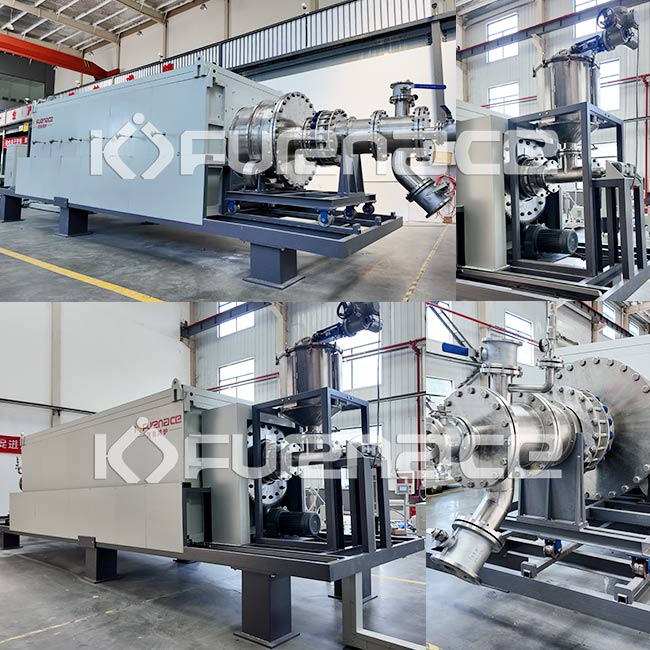
The core of a rotary kiln is a steel cylindrical furnace lined with high-temperature resistant refractory materials. Supported by riding wheels with a 3%-6% inclination angle, it achieves 360° continuous rotation via a gear transmission system. Adopting indirect heating, heating elements are placed outside the process tube, fully isolated from materials. Its key advantage is that the rotating mechanism drives materials to tumble continuously, eliminating temperature hotspots for uniform heating, while gravity and inclination enable automatic conveying.
(2) Static Tube Furnace: Precision Temperature-Controlled Static Processing
A tube furnace features a fixed furnace with a high-temperature resistant working tube (quartz, corundum, or metal), where samples are statically placed for processing. The heating system uses heating wires wrapped around the tube or SiC heating rods, relying on thermal radiation. Compact in structure and supporting multi-angle installation, it excels in temperature control precision through optimized furnace design.
II. Comprehensive Comparison of Key Technical Parameters
Material Movement: Dynamic rotary kilns realize forced turning and automatic conveying via rotation, gravity, and inclination, suitable for mix-requiring powders/granules. Static tube furnaces keep samples fixed, heated by conduction/radiation, ideal for non-destructive precision sample processing.
Temperature Performance: Dynamic rotary kilns reach 1100-1500°C with multi-zone control ensuring batch consistency. Static tube furnaces achieve 1500-1700°C, with ±5°C precision via three-zone control, offering superior single-point accuracy.
Processing Capacity: Dynamic rotary kilns enable continuous large-scale industrial production; static tube furnaces operate in batches, suitable for R&D and pilot-scale testing.
Atmosphere Control: Dynamic rotary kilns require strict rotary sealing but support countercurrent atmospheres for conventional reactions. Static tube furnaces boast excellent static sealing (vacuum degree up to 10⁻³Pa), preferred for high-vacuum/high-purity processes.
Residence Time: Dynamic rotary kilns allow precise gradient control via speed and inclination adjustment; static tube furnaces have fixed time control for processes with stable durations.
III. Analysis of Core Selection Factors
(1) Temperature Requirements and Precision
High-temperature scenarios (>1500°C): Prioritize static tube furnaces for stable high-temperature performance.
Wide temperature gradient needs: Dynamic rotary kilns’ multi-zone control eliminates gradients effectively.
High-precision control (±1°C): Static tube furnaces are optimal for temperature-sensitive precision processes.
(2) Material Adaptability
Dynamic rotary kilns: Suitable for powders, granules, irregular solids, and reactions needing mixing or efficient gas-solid contact (e.g., catalyst roasting, solid waste pyrolysis).
Static tube furnaces: Ideal for bulk materials, films, precision components, and fragile samples (e.g., semiconductor substrates, nanomaterials).
Limitations: Rotary kilns avoid liquids/fragile structures; tube furnaces are unsuitable for batch processing of caking-prone powders.
(3) Production Mode and Scale
Continuous industrial production (>100kg/day): Dynamic rotary kilns enable 24/7 operation with high efficiency.
R&D and pilot-scale testing (<10kg/day): Static tube furnaces offer flexibility, easy sample replacement, and low cost.
(4) Atmosphere and Vacuum Needs
Conventional oxidation/reduction: Both are applicable, but tube furnaces better maintain atmosphere purity.
High-vacuum processes: Static tube furnaces are superior due to higher vacuum levels.
Countercurrent reactions: Dynamic rotary kilns are configurable for specific gas-solid reactions.
IV. Typical Application Fields
(1) Dynamic Rotary Kilns
Environmental protection: Solid waste pyrolysis/gasification and waste incineration for full combustion.
Chemical catalysis: Activated carbon activation to enhance gas-solid contact.
Metallurgy and building materials: Calcination of cement clinker and refractory materials for large-scale production.
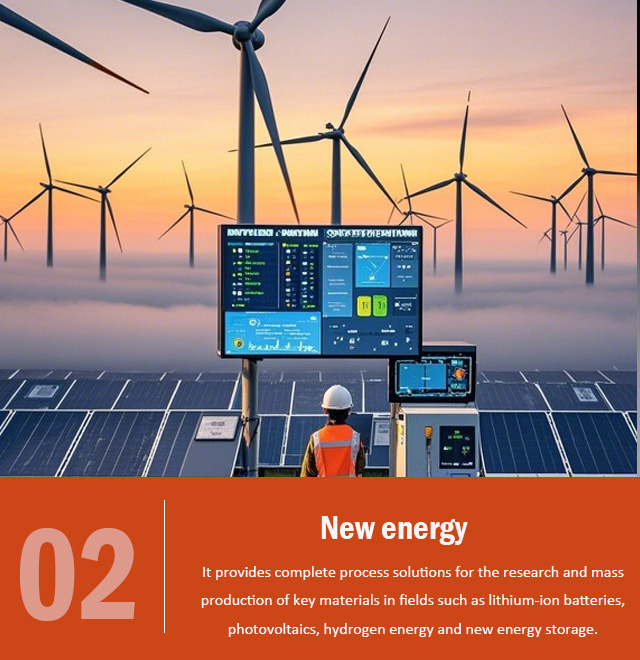
New energy materials: Sintering of battery cathode precursors to ensure uniform composition.
(2) Static Tube Furnaces
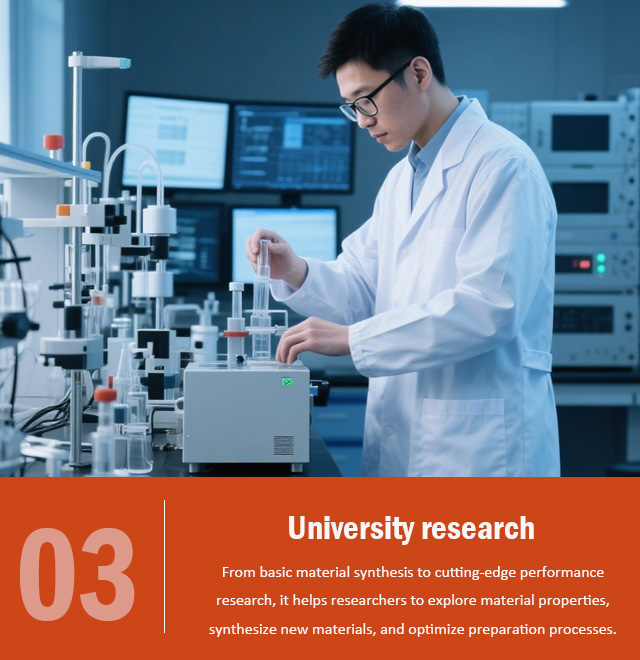
New material R&D: Precise thermal processing of graphene and nanomaterials requiring high temperature control.
Semiconductor processes: Wafer annealing and thin film deposition with high-purity atmospheres and static samples.
Laboratory pilot-scale: Rapid screening of gram-level samples with convenient operation and controlled costs.
Precision manufacturing: Stress-free sintering of precision ceramics to avoid mechanical damage.
V. Comprehensive Economic Evaluation
Equipment Investment: Dynamic rotary kilns have higher costs due to complex structures; static tube furnaces are more affordable with simple designs.
Energy Consumption: Dynamic rotary kilns consume more energy (rotary drive + large furnace); static tube furnaces save energy via centralized heating.
Maintenance Costs: Dynamic rotary kilns require regular replacement of seals and drives (higher costs); static tube furnaces only need occasional heating element maintenance (lower costs).
Production Efficiency: Dynamic rotary kilns excel in continuous production; static tube furnaces have lower efficiency in batch operations.
Labor Costs: Dynamic rotary kilns reduce labor needs with automation; static tube furnaces require manual intervention (medium costs).
Return on Investment: Dynamic rotary kilns are advantageous for >100kg/day; static tube furnaces offer better cost-effectiveness for <10kg/day.
VI. Selection Process and Practical Suggestions
Clarify process requirements: Define core objectives, temperature ranges, and atmosphere parameters.
Assess material form: Prioritize rotary kilns for powders/granules needing mixing; tube furnaces for bulk/precision/fragile samples.
Determine production scale: Rotary kilns for continuous industrial production; tube furnaces for R&D.
Evaluate precision needs: Tube furnaces for ±1°C control; rotary kilns for ±5°C uniformity.
Confirm atmosphere/vacuum: Tube furnaces for high-purity/high-vacuum; rotary kilns for conventional/countercurrent atmospheres.
For special processes (e.g., gradient sintering), a "multi-zone tube furnace + rotary feeding device" balances precision and uniformity. Recommend verifying processes with rotary tube furnaces in the pilot stage, then switching to large-scale rotary kilns for industrialization based on scale-up effects.
Conclusion
Dynamic rotary kilns and static tube furnaces are complementary rather than substitutive. Selection hinges on balancing material characteristics, production scale, precision requirements, and budget. This article aims to provide clear guidance for thermal processing practitioners to optimize processes and improve efficiency. In practice, conduct in-depth technical communication with manufacturers to customize solutions based on specific parameters.
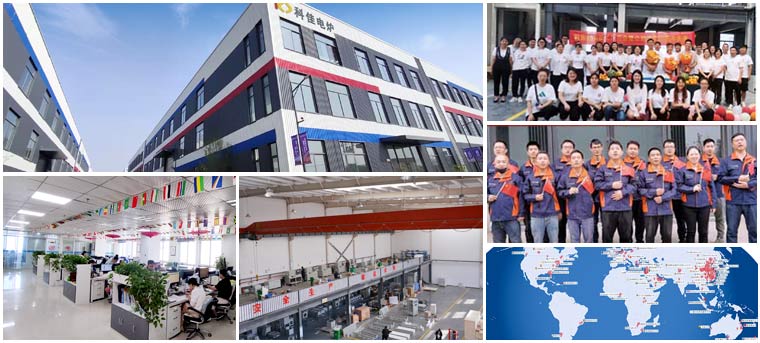
Zhengzhou KJ Technology Co., Ltd. is a high-tech enterprise specializing in the research, development and sales of heat treatment products. Our products cover muffle furnaces, tube furnaces, vacuum furnaces, atmosphere furnaces, CVD/PECVD systems, dental furnaces, bell type furnaces , trolley furnaces, etc., which are widely used in metallurgy, vacuum brazing, ceramic sintering, battery materials, metal processing , parts annealing, additive manufacturing, semiconductors, scientific intelligent instrumentation, aerospace and industrial automatic control systems and other different fields.Please feel free to contact us.WhatsApp: +86 18037178440
Email: web@kejiafurnace.com
 English
 简体中文
简体中文 Русский язык
 Français
 日本語
日本語 한국어
한국어 Português
 Español
 Website navigation
 Position:








 Send E-mail:web@kejiafurnace.com
 Wechat/Whatsapp: +86 18037178440
 Company Tell: +(86)18037178440







 E-mail:web@kejiafurnace.com
 Tell:+(86) 18037178440
 Whatapp:+(86) 180-3717-8440
 Address:Room 1505, Building 9, No. 26 Dongqing Street, Zhengzhou High-tech Industrial Development Zone