Vacuum Brazing Temperature Curve: Key Parameters & Trends
The core of vacuum brazing technology lies in the precise control of the temperature curve, which directly determines the strength, density of brazed joints and the service life of workpieces. Combined with material characteristics and production practice, this article systematically analyzes the components, optimization logic of the temperature curve, and looks forward to the development direction of new processes, providing technical reference for industrial production.I. Three Core Stages of the Temperature Curve(1) Heating Stage: Dual Keys of Speed Control and Temperature UniformityThe heating rate should be flexibly adjusted according to the thermal sensitivity of materials, with a conventional range of 5-20℃/min. For thermally stress-sensitive workpieces such as ceramic-metal composites, the rate needs to be reduced to 2-5℃/min to avoid cracks caused by differences in thermal expansion. At the same time, temperature uniformity control is crucial: the overall temperature difference must be maintained within ±10℃, and in the critical range of 100℃ before the brazing temperature, the temperature difference between various points in the furnace must be ≤±5℃ to ensure uniform heating of the entire workpiece and prevent local overheating or insufficient heating.(2) Holding Stage: Precise Matching of Materials and StructuresThe holding temperature must be strictly set 10-50℃ above the liquidus line of the brazing filler metal. For example, the holding temperature of silver-based brazing filler metal (liquidus line 720℃) is usually 730-770℃. The holding time is adjusted according to the size and complexity of the workpiece: small and simple parts only need 5-15 minutes, while large and complex structural parts such as hot-end components of aero-engines need to be extended to 30-60 minutes. The temperature fluctuation during this stage must be controlled within ±5℃ to ensure that the brazing filler metal is fully melted, spread, and forms a stable bond with the base metal.(3) Cooling Stage: Balancing Efficiency and StressThe selection of cooling rate needs to balance residual stress control and production efficiency. Special materials or structures require slow cooling or stepwise cooling. Cooling methods are divided into natural cooling and forced cooling (such as filling with high-purity nitrogen): forced cooling can significantly shorten the cycle, but it is necessary to evaluate its thermal shock risk to the workpiece and make a comprehensive decision based on material characteristics and production requirements.
II. Three Core Principles of Temperature Curve Optimization(1) Scientifically Setting Temperature RangeBasic principle: The brazing temperature should be 30-100℃ above the liquidus line of the brazing filler metal;
Single-element brazing filler metal: 50-70℃ above the melting point is sufficient;
Multi-component alloy brazing filler metal: Due to the wide crystallization temperature range, the temperature needs to be further increased;
Upper limit constraint: All set temperatures must be lower than the melting point of the base metal to prevent workpiece deformation or erosion.(2) Reasonably Determining Holding TimeThe holding time is affected by factors such as the heat capacity of parts and tooling, and the furnace load. The optimization direction is to save energy by reducing temperature or shortening time on the premise of ensuring welding quality; the optimal holding parameters for different furnace loads need to be selected through process experiments to avoid a one-size-fits-all approach.(3) Stepwise Temperature Control Strategy: Combination of Slow-Medium-FastAdopting a stepwise heating mode can effectively reduce welding defects:
Slow heating stage: Fully remove gas in workpieces and brazing filler metal to reduce weld porosity;
Medium-speed heating stage: Reduce the temperature difference between the inside and outside of the workpiece to relieve thermal stress;
Fast heating stage: Improve production efficiency and avoid excessive growth of base metal grains affecting performance.III. Development Trends of New Processes(1) Eliminating Stepwise HeatingTraditional processes control thermal stress through multiple holding platforms, while new technologies adopt a slower heating rate (such as below 15℃/min) and eliminate holding steps. This improvement not only shortens the process cycle and improves product qualification rate but also avoids the adverse effects of vacuum fluctuation on equipment.(2) Enhancing Temperature UniformityThrough technical means such as zoned heating and real-time monitoring with multiple load thermocouples, the temperature difference between various areas of the workpiece during heating is strictly controlled within the allowable range, further optimizing the stability of welding quality.ConclusionThere is no universal standard for vacuum brazing temperature curves. Parameter setting must be based on four core factors: brazing filler metal characteristics, base metal type, workpiece structure, and furnace load, and determined through the combination of theoretical calculation, finite element simulation, and process experiment. Currently, the industry is moving towards intelligence and adaptability, aiming to achieve dual improvements in welding quality and production efficiency through more precise process control.
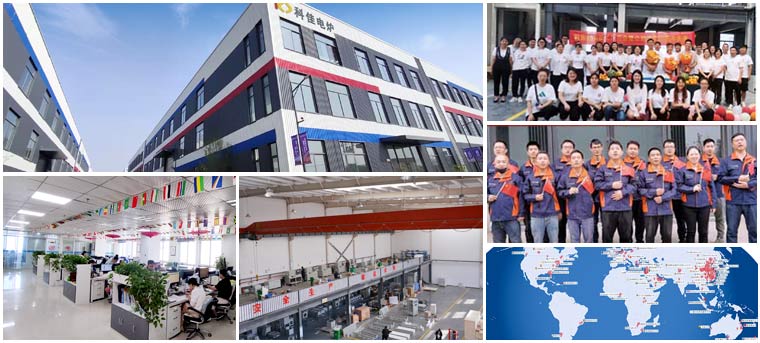
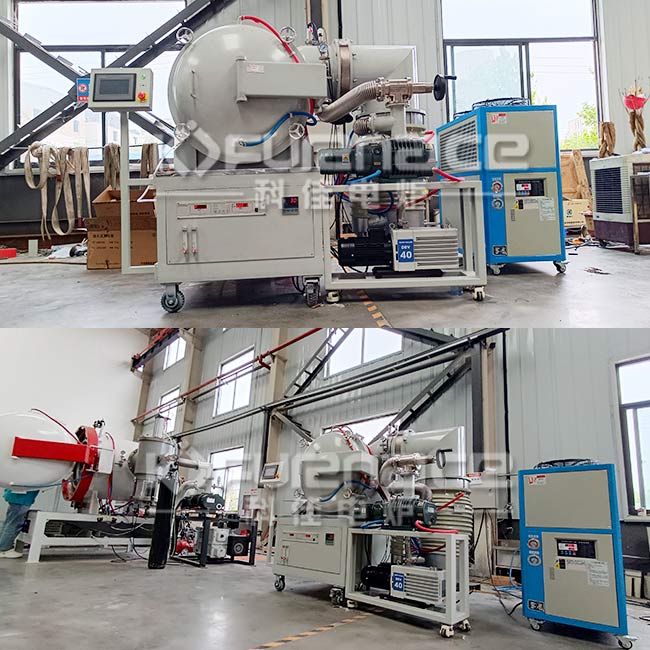
Zhengzhou KJ Technology Co., Ltd. is a high-tech enterprise specializing in the research, development and sales of heat treatment products. Our products cover muffle furnaces, tube furnaces, vacuum furnaces, atmosphere furnaces, CVD/PECVD systems, dental furnaces, bell type furnaces , trolley furnaces, etc., which are widely used in metallurgy, vacuum brazing, ceramic sintering, battery materials, metal processing , parts annealing, additive manufacturing, semiconductors, scientific intelligent instrumentation, aerospace and industrial automatic control systems and other different fields.
Please feel free to contact us.
WhatsApp: +86 18037178440
Email: web@kejiafurnace.com
 English
 简体中文
简体中文 Русский язык
 Français
 日本語
日本語 한국어
한국어 Português
 Español
 Website navigation
 Position:









 Send E-mail:web@kejiafurnace.com
 Wechat/Whatsapp: +86 18037178440
 Company Tell: +(86)18037178440






 E-mail:web@kejiafurnace.com
 Tell:+(86) 18037178440
 Whatapp:+(86) 180-3717-8440
 Address:Room 1505, Building 9, No. 26 Dongqing Street, Zhengzhou High-tech Industrial Development Zone