Analysis of the Core Differences Between Ashing Furnaces and Muffle Furnaces
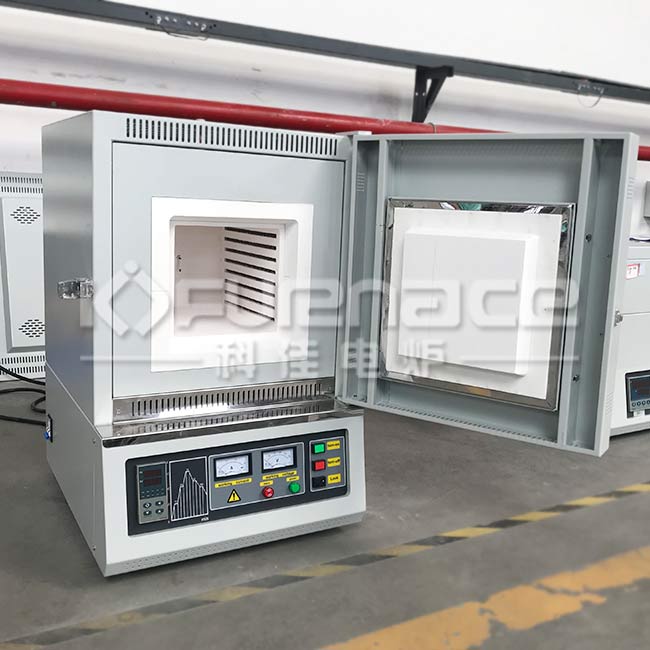
In the high-temperature equipment of laboratories, ashing furnaces and muffle furnaces are two widely used instruments. They are closely related yet have significant differences in functions, designs, and other aspects. Simply put, an ashing furnace is a muffle furnace specially optimized for ashing processes, belonging to a special and dedicated type within the muffle furnace family.
I. Basic Definitions
Muffle Furnace: As a general category of high-temperature heating equipment, its core function is to provide a controllable high-temperature environment, with a temperature range typically between 500-1700℃. It boasts strong functional versatility and can be widely applied in various experimental scenarios such as ashing, sintering, annealing, and melting, serving as a multi-functional high-temperature processing equipment in laboratories.
Ashing Furnace: Designed specifically for the "sample ashing" requirement, it is a dedicated muffle furnace. Its core function focuses on effectively removing organic substances from samples through high-temperature combustion while completely retaining inorganic ash, with clearly targeted application scenarios.
1. Different Main Uses
Ashing Furnace: Its core use is the ashing treatment of organic substances. Common applications include ash content determination of samples such as food, soil, and coal, as well as ashing analysis of materials like plastic bags and rubber, focusing on ash-related experimental needs. For example, in food testing, food samples are burned in an ashing furnace to remove organic substances such as proteins and fats, and the residual inorganic ash can be used to determine the mineral content in food; in environmental testing, after ashing soil samples, the content of pollutants such as heavy metals can be detected more accurately.
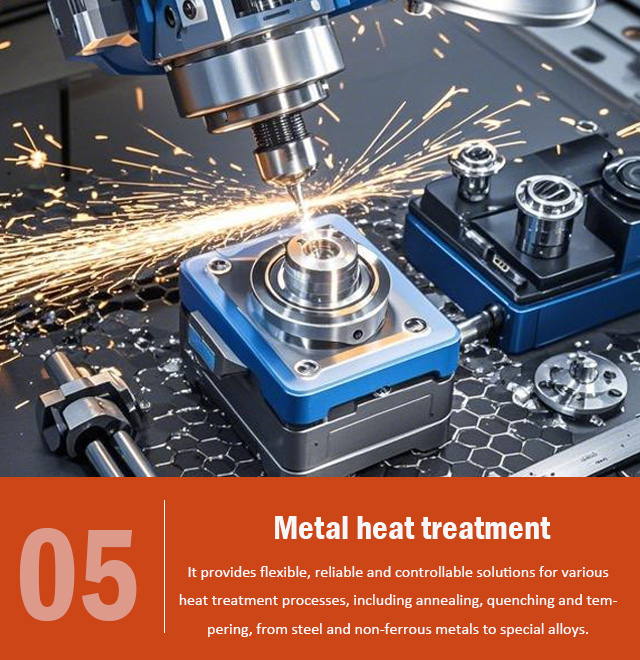
Muffle Furnace: It has an extremely wide range of application scenarios. In addition to basic ashing operations, it can also be used in various high-temperature experimental processes such as calcination, annealing, quenching, high-temperature sintering, ceramic firing, and metal heat treatment. In the field of materials science, it can be used for annealing treatment of metal materials to improve material performance; in the ceramic industry, it can meet the high-temperature sintering needs of ceramic green bodies to form a dense structure; in metallurgical experiments, it can realize metal melting, alloy preparation and other operations, acting as a multi-functional high-temperature processing equipment in laboratories.
2. Structural and Design Differences
Special Designs of Ashing Furnaces:
The furnace chamber is designed to be short, emphasizing the circulation of fresh air to accelerate the full combustion of organic substances and ensure ashing efficiency;
Heating elements are installed outside the furnace chamber, which can effectively prevent contamination of the elements by sample volatiles, ensuring equipment service life and experimental accuracy; A long chimney pipe is equipped on the top to quickly discharge flue gas generated during combustion, maintaining a clean internal environment of the furnace chamber and reducing the accumulation of harmful gases in the laboratory; A multi-layer tray design is adopted to support simultaneous processing of batch samples, improving experimental efficiency, especially suitable for testing laboratories that need to process a large number of similar samples; The inner wall of the furnace chamber is smooth and flat, mostly made of high-temperature resistant and corrosion-resistant materials (such as high-purity alumina), which is convenient for cleaning and maintenance. Some models are also equipped with ash collection grooves for convenient ash recovery and subsequent analysis.
Standard Designs of Muffle Furnaces:
It has a closed muffle cavity, mainly relying on natural convection or static air for heat transfer, reducing the impact of the external environment on the temperature inside the furnace; Heating elements are located inside the furnace chamber (usually resistance wires, silicon carbide rods, etc.), ensuring temperature uniformity inside the furnace through free radiation of heat. The temperature fluctuation range can usually be controlled within ±5℃, meeting the temperature stability requirements of various experiments; Only a ventilation hole is set on the top, suitable for the discharge of a small amount of flue gas. The design focuses more on overall airtightness, which can effectively maintain the temperature stability inside the furnace; The structural design focuses on ensuring temperature stability and uniformity during long-term use. Some high-end models are also equipped with programmable temperature control systems, supporting multi-stage heating, heat preservation, and cooling programs to adapt to diverse experimental needs.
3. Temperature Ranges
Ashing Furnace: The temperature range is usually 500-1200℃, which can fully meet the requirements for complete combustion of organic substances (most organic substances can be completely decomposed at 800-1000℃). Ideal ashing effects can be achieved without excessively high temperatures, while avoiding the volatilization of inorganic ash caused by excessively high temperatures, which affects the accuracy of test results.
Muffle Furnace: The temperature range is wider, with a conventional range of 500-1700℃, and some high-temperature models (such as silicon molybdenum rod heating type) can even reach 1800℃. Different temperature ranges are suitable for different experiments: the medium-low temperature section (500-1000℃) can be used for ashing and drying; the medium-high temperature section (1000-1400℃) is suitable for ceramic sintering and metal heat treatment; the high-temperature section (1400-1800℃) can meet the experimental needs of special material melting and high-temperature synthesis, which can adapt to the diverse high-temperature requirements of different experimental processes.
III. Usage Precautions and Maintenance Points
1. Usage and Maintenance of Ashing Furnaces
Before use, check whether the chimney is unobstructed to ensure smooth flue gas discharge and avoid excessive pressure inside the furnace chamber; Samples should be evenly spread on the tray to avoid excessive accumulation, which affects air circulation and ashing uniformity; If a large amount of smoke is generated during the ashing process, the ventilation rate can be appropriately adjusted to prevent smoke from overflowing and polluting the laboratory environment; After the experiment, wait for the furnace chamber to cool down to room temperature naturally before cleaning, to avoid cracking of the furnace chamber material due to contact with cold water at high temperature; Regularly check the appearance of heating elements. If oxidation or damage is found, replace them in time. At the same time, clean the residual ash in the furnace chamber to keep the equipment clean.
2. Usage and Maintenance of Muffle Furnaces
Before the experiment, check the sealing performance of the furnace door to ensure good airtightness, avoiding temperature loss and heat leakage; It is forbidden to place flammable, explosive, and highly corrosive samples in the furnace to prevent damage to the furnace chamber and heating elements; The heating rate must strictly follow the equipment requirements to avoid excessive temperature fluctuations caused by rapid heating, which affects the experimental effect and equipment life; After long-term use, calibrate the temperature sensor to ensure accurate temperature display. If the temperature uniformity decreases, check whether the distribution of heating elements is reasonable or replace aging elements; Regularly clean the debris and oxides in the furnace chamber to keep the inner wall of the furnace chamber clean and extend the service life of the equipment.
IV. Equipment Selection Suggestions
Prioritize an Ashing Furnace: If daily experimental work mainly focuses on ash content determination and high requirements are placed on the purity and recovery rate of ash (such as in food testing laboratories, environmental testing laboratories, coal quality inspection institutions, etc.), the specialized design of an ashing furnace can better meet the needs. Its ventilation and anti-pollution design can effectively ensure the accuracy of experimental data.
Prioritize a Muffle Furnace: If it is necessary to handle multiple high-temperature experiments such as ashing, sintering, and annealing, the laboratory has a variety of experimental types with limited budget, and pursues equipment cost-effectiveness and functional versatility, the comprehensive functions of a muffle furnace are more advantageous. It can provide a one-stop solution for various experimental needs and reduce equipment procurement costs.
Summary
An ashing furnace is essentially a muffle furnace dedicated to ashing processes, with enhanced ventilation design, anti-pollution functions, and batch processing efficiency, making it more suitable for specialized ashing experiments. A muffle furnace, on the other hand, is a comprehensive and versatile high-temperature equipment that meets diverse experimental scenarios with its wide applicability and temperature adjustment range. In actual selection, comprehensive consideration should be given to the experiment type, sample characteristics, testing requirements, and budget. At the same time, standardized use and regular maintenance of the equipment should be carried out to give full play to the equipment performance and ensure the smooth progress of experimental work.
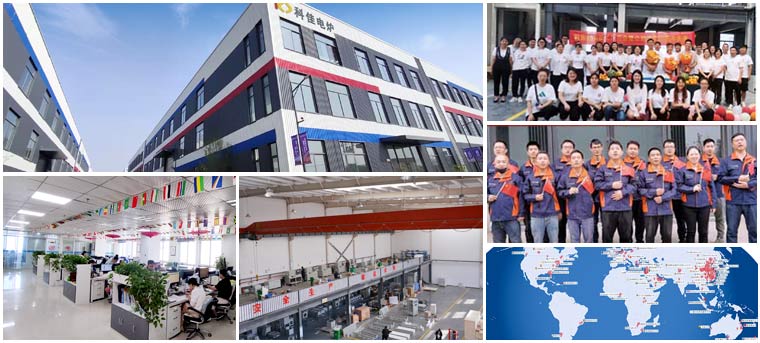
Zhengzhou KJ Technology Co., Ltd. is a high-tech enterprise specializing in the research, development and sales of heat treatment products. Our products cover muffle furnaces, tube furnaces, vacuum furnaces, atmosphere furnaces, CVD/PECVD systems, dental furnaces, bell type furnaces , trolley furnaces, etc., which are widely used in metallurgy, vacuum brazing, ceramic sintering, battery materials, metal processing , parts annealing, additive manufacturing, semiconductors, scientific intelligent instrumentation, aerospace and industrial automatic control systems and other different fields.
Please feel free to contact us.
WhatsApp: +86 18037178440
Email: web@kejiafurnace.com
 English
 简体中文
简体中文 Русский язык
 Français
 日本語
日本語 한국어
한국어 Português
 Español
 Website navigation
 Position:








 Send E-mail:web@kejiafurnace.com
 Wechat/Whatsapp: +86 18037178440
 Company Tell: +(86)18037178440







 E-mail:web@kejiafurnace.com
 Tell:+(86) 18037178440
 Whatapp:+(86) 180-3717-8440
 Address:Room 1505, Building 9, No. 26 Dongqing Street, Zhengzhou High-tech Industrial Development Zone